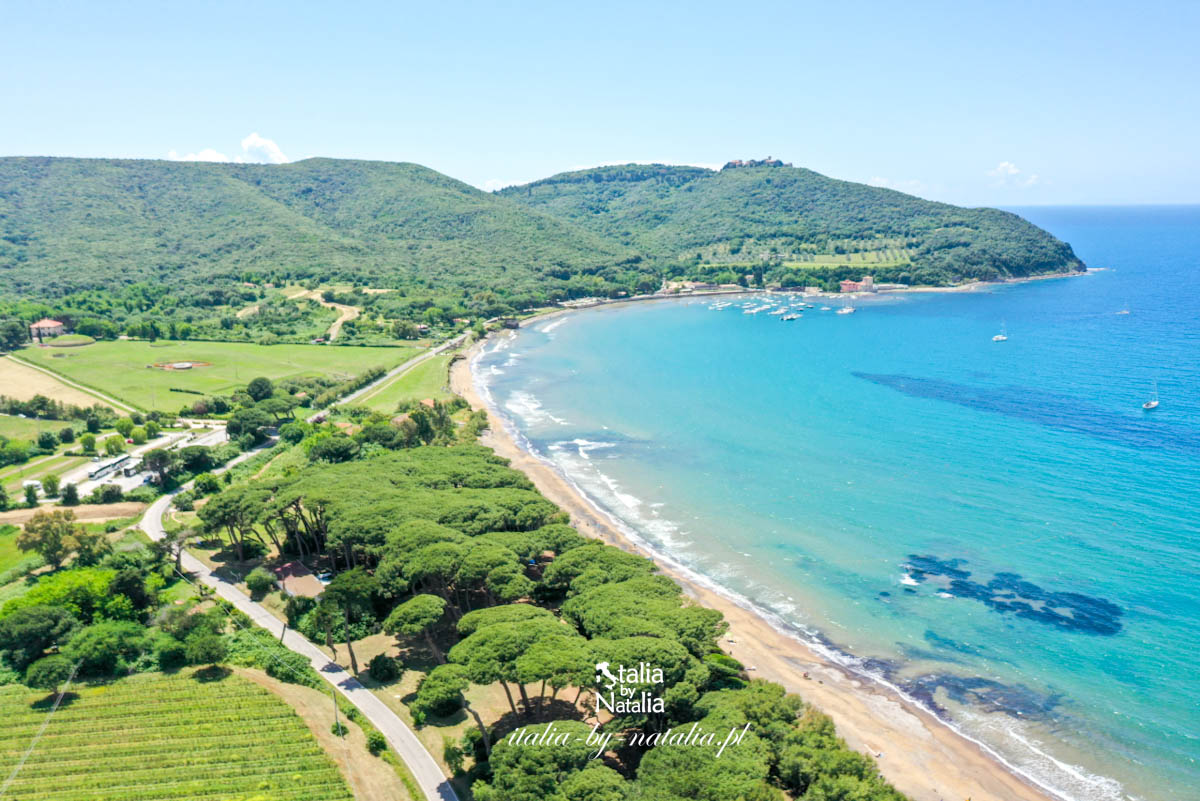
The beaches of Tuscany stretch along approximately 280 kilometres of coastline and are surprisingly diverse. You will find wide sandy beaches backed by dunes and pine forests, particularly appealing to those seeking peace and a closer connection with nature, as well as intimate coves at the foot of cliffs and elegant seaside resorts with excellent facilities. In this guide, I describe nearly 40 of the most interesting beaches and stretches of coastline, taking you from the border with Liguria all the way to Lazio. I also suggest where to go for a seaside holiday in Tuscany, which places I liked best and what you can expect along the different sections of the coast.
Before you start reading, it is worth knowing:
- The guide follows the Tuscan coastline from the border with Liguria all the way to Lazio.
- In some sections, I describe individual beaches, while in others I cover entire stretches of coastline encompassing several neighbouring beaches.
- Alongside the beach descriptions, you will find essential practical information about each location, as well as the places I believe are particularly worth seeing.
- If you are looking for natural beaches backed by dunes and pine forests, pay particular attention to the central and southern sections of the Tuscan coast.
- For many of the beaches, you will also find my personal suggestions on who is most likely to enjoy each place.
What are the beaches in Tuscany like?
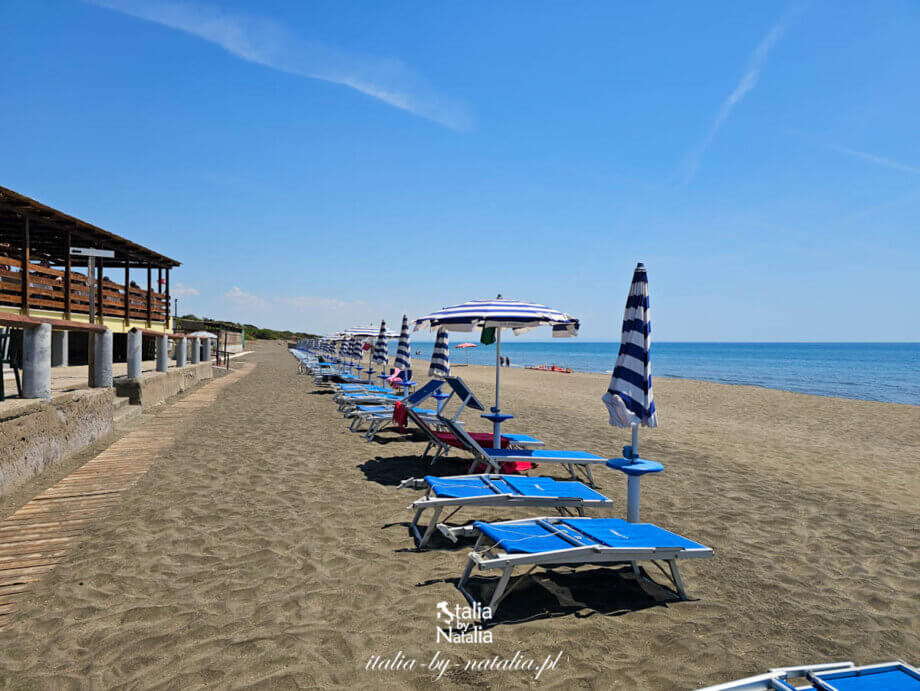
Beaches in Italy vary greatly, and both their appearance and the conditions you can expect depend largely on latitude. Along most of the Tuscan coast, the beaches are covered with slightly grey or dark golden sand. The seabed is a similar colour, which means the water is not as intensely turquoise as it is, for example, on the Coast of the Gods in Calabria or in Sardinia.
What do you get instead? Long sandy beaches, often backed by pine forests growing just beyond the shoreline. However, some stretches of the coast look completely different. You will not find this type of beach in Livorno or south of the city as far as Vada, nor along the Populonia–Piombino section or between Punta Ala and Le Rocchette. In these areas, cliffs descend into the sea, with small beaches tucked between them, usually covered with pebbles or stones.
The northern part of the Tuscan coast is dominated by very long, wide beaches, most of which are occupied by organised beach clubs with sun loungers and parasols. This stretch of coastline is also considered the most luxurious and prestigious. Fortunately, some beautiful wild beaches have survived here as well.
Sand dunes on the beaches of Tuscany
One of the most distinctive features of the Tuscan coast is its coastal dunes, which are now a relatively rare sight in Italy. In the past, there were many more of them, but a large number were destroyed. Some of Tuscany’s dunes were lost as well, although in many places they have been protected through the creation of zones where development is restricted. For this reason, access to beaches in dune areas is often limited to designated paths, frequently in the form of wooden walkways.
Tuscany’s coastal dunes range from around one metre to several metres in height. Their greatest appeal lies not in their height, but in their vast extent and natural character. In many places, they form long, picturesque belts separating the beach from pine forests, Mediterranean scrub and wetlands.


The best-preserved dunes in Tuscany are found primarily in Parco Regionale della Maremma, more precisely between Marina di Alberese and Collelungo. Valuable dune systems have also survived in Parco Regionale Migliarino, San Rossore e Massaciuccoli, along the stretch from Marina di Torre del Lago Puccini to Lecciona Beach, as well as from San Rossore towards Marina di Pisa. Smaller but still well-preserved dunes can be found between Le Rocchette and Castiglione della Pescaia, around Marina di Grosseto and Principina a Mare, and on the Feniglia and Giannella sandbars, the so-called “links” connecting the mainland with Monte Argentario.
Paid and free beaches
Spiaggia libera, bagno and stabilimento balneare
Along the Tuscan coast, you will find both free beaches and stretches occupied by private beach clubs. A spiaggia libera is a public beach that you can access without buying a ticket or renting a sun lounger. Visitors usually bring their own towel, beach chair or parasol, although the facilities and services available vary from place to place. Some free beaches have showers, toilets or a bar, while others have no facilities at all.
A stabilimento balneare, on the other hand, is an organised beach club operating on a section of beach covered by a concession. You mainly pay to use its facilities and services, such as parasols, sun loungers, changing cabins, showers, toilets, a bar and lifeguard supervision. In Italy, and especially in Tuscany, the word bagno is also used very often. It does not refer to a separate type of beach. It is simply a common term for a stabilimento balneare and also appears in the names of individual beach clubs, such as Bagno Delfino or Bagno Roma.
You may also come across the term spiaggia libera attrezzata. This is a beach that can be accessed without having to rent a sun lounger, but which offers some facilities and services. The rules may vary depending on the municipality and the operator, so before putting up your own parasol, it is worth checking the regulations displayed at the entrance.
Can you walk along the shoreline through private beach clubs?
Yes. A beach occupied by a stabilimento balneare does not become the private property of the hotel or beach club owner. It remains part of the state-owned coastal area, while the operator is granted only the right to use it under a concession.
Access to the sea and passage along the strip of beach directly beside the water should be free of charge. This means that you may cross the beach club area to reach the shoreline, enter the sea or continue walking along the coast. Staff should not charge a fee solely for allowing you to pass through. They may, however, direct you to a designated path leading to the water rather than allowing you to squeeze between the parasols.
The right of passage does not include the right to use the beach club’s sun loungers, parasols, showers, changing cabins, toilets or other services free of charge. You may not spread out a towel between the paid-for spots either. The strip directly beside the water must remain clear, primarily to allow people to pass and emergency services to operate, so it should not be treated as a place for spending the entire day on the beach.
In practice, you can therefore walk freely along the shoreline even when passing one stabilimento balneare after another. Where the coastline is interrupted by rocks, buildings or a harbour, you will need to use a designated passage or take a different route around that section.
Based on my observations, access is most restricted at beaches located in the small coves of Monte Argentario, the rocky peninsula at the southern end of Tuscany. The same law applies there as elsewhere, but in many cases the land adjoining the beach is privately owned, and the owner is not required to provide access to everyone.
Blue Flag beaches in Tuscany
Many beaches along the Tuscan coast are awarded the Blue Flag. This international distinction is granted on the basis of criteria including water quality, safety, proper beach management, available services and environmental protection measures. It is not a ranking of the most beautiful beaches, nor does it assess the colour of the sand or sea. Moreover, the list of awarded locations changes every year, so later in this guide I will not indicate which beaches currently hold the flag and which do not. If this is important to you, you can find the latest list of Italian beaches awarded the Blue Flag on the official website of the Bandiera Blu programme.
Towns and cities on the Tuscan coast
When visiting the Tuscan coast for the first time, it is worth knowing that the towns located directly by the sea do not have quite the same atmosphere for which the rest of the region is so widely loved. There are, of course, charming gems close to the coast, but reaching them usually requires travelling at least a few kilometres inland from the beaches.
When to Visit the Tuscan Coast? The Seaside Season
June and September on the Tuscan Coast
The beach season in Tuscany begins around the end of May and the beginning of June and lasts until the end of September. In May, you may already see a few people sunbathing and relaxing to the sound of the waves, although only a handful venture into the sea, which is still quite cool at this time of year. The season gets properly under way over the long weekend around Festa della Repubblica, Italy’s Republic Day and a public holiday celebrated on 2 June.
In September, the beaches tend to be crowded only at weekends, and even then mainly when the weather is good. On such days, locals eagerly pack baskets of food and blankets and head to the coast to enjoy the last days of summer. On weekdays, especially under cloudy skies, September beaches are rarely busy. From mid-September, when the Italian school year begins, most of the people on the beaches are tourists.
July and August on the Tuscan Coast
August is the worst month for travelling to Italy, especially if you are heading to the coast. In Poland, people usually take their holidays in July and August, and in recent years increasingly often in June and September as well. In Italy, however, around 90% of people take their main holiday in August, particularly during the second and third weeks of the month. The peak falls on 15 August, Ferragosto, and the days that form a long weekend around the holiday. At that time, all attractive and popular destinations are flooded with tourists, while prices reach their highest levels. August is also usually the hottest month of the year.
July is a much better month for a summer holiday on the Tuscan coast, especially at the beginning of the month. Prices are already high and the heat can still be intense, but the August crowds have not yet arrived. In my experience, oppressive temperatures are more likely in the second half of July, although this is by no means a rule. In 2026, during the final week of May, temperatures on the Tuscan coast reached 30-33°C, which is unusually hot for that time of year.
Where to Stay on the Tuscan Coast?
Agriturismos and Villas
Tuscany is a land of picturesque agriturismos, which are especially popular inland, particularly in the Val d’Orcia, Chianti and around San Gimignano and Volterra. Throughout the region, you will also find a wide choice of houses and villas for rent, often with a swimming pool and beautiful views. This option works particularly well if you are looking for peace and quiet or travelling with a larger group.
Campsites
Campsites dominate the Tuscan coast and are an excellent option, especially when travelling with younger children, as this type of accommodation offers a huge range of attractions. Swimming pools, lagoon-style pools, playgrounds, splash parks, water slides, entertainment programmes and much more ensure that little ones will not get bored during the holiday. Anyone who still thinks of a campsite as little more than a patch of land on which to pitch a tent should take a closer look at what modern sites have to offer. Today, many of them provide high-standard mobile homes with bathrooms, kitchens, private terraces and small gardens where you can barbecue or relax on a sun lounger in the shade of the pine trees. You will find several highly rated sites like PuntAla Camp & Resort or very popular camping Park Albatros, located on the central Tuscan coast.
Ghiacci Vecchi Apartments
On the central stretch of the Tuscan coast, between San Vincenzo and Populonia, the Ghiacci Vecchi apartment complex is a wonderful and reasonably priced base for relaxing by the sea and exploring the surrounding coastline. Surrounded by greenery and flowers, the property offers extensive grounds with two swimming pools, several play areas for children, a barbecue area, a restaurant and parking.
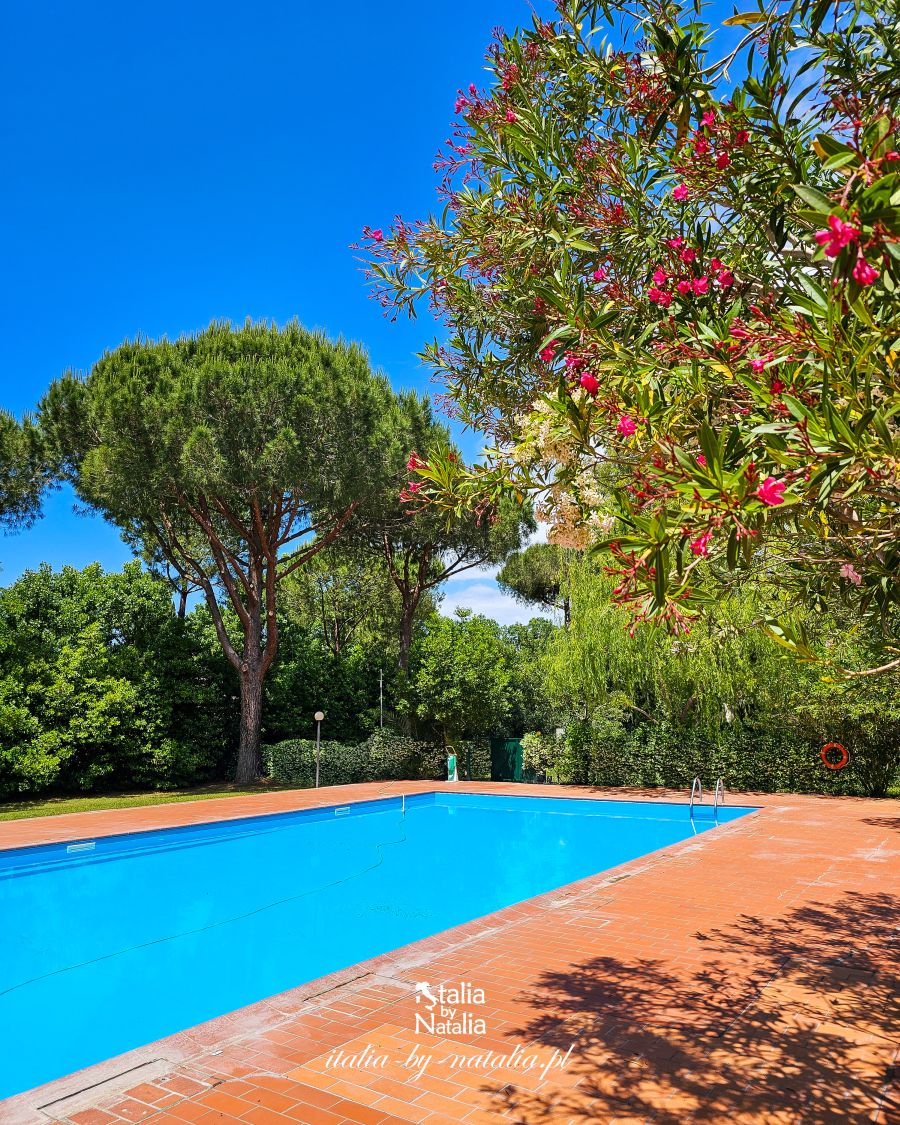
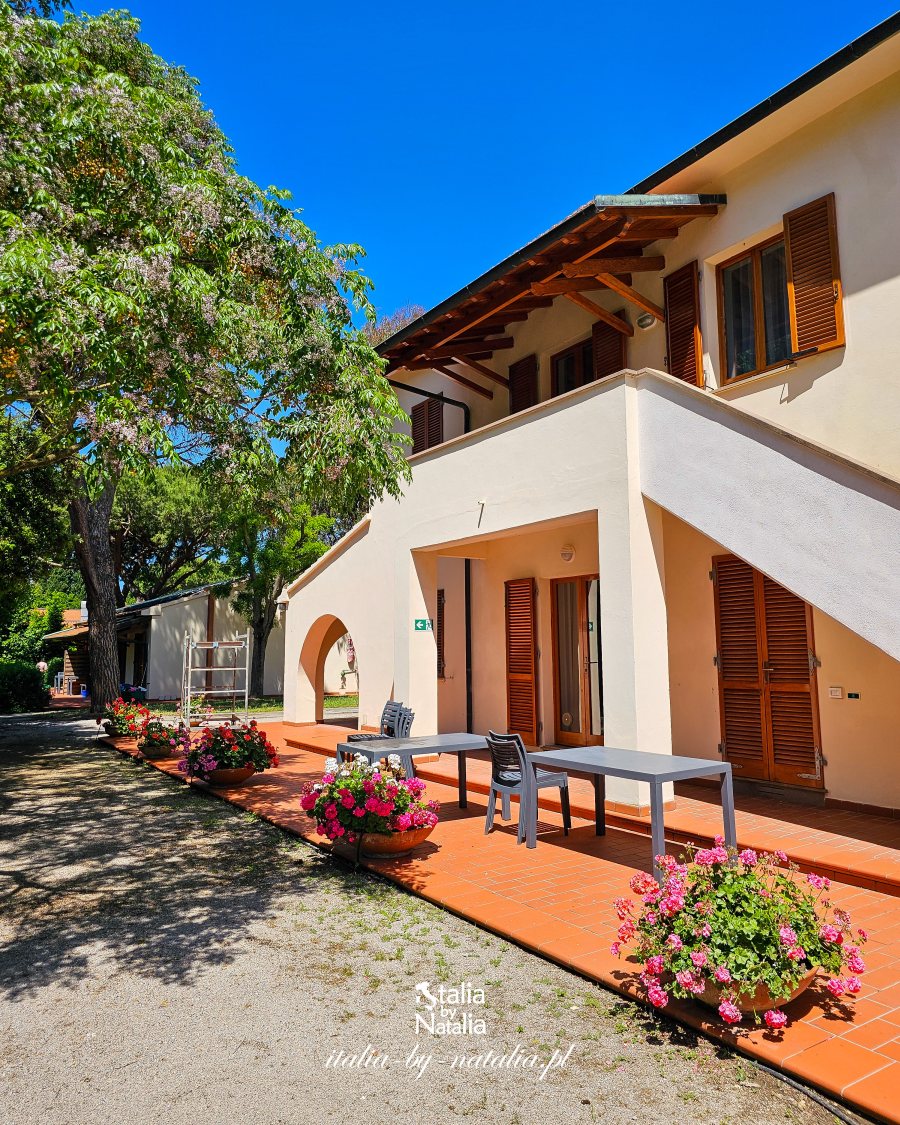
You can read more in a separate article on the blog, where you will also find a discount code for Italia by Natalia readers booking a stay. Ghiacci Vecchi also has a english website.
Which Part of the Tuscan Coast has the best beaches?
I encourage you to read this very long guide in full and look through all the photos. However, because of its length, I have also prepared a shorter overview to help you quickly understand the main features of each section of the coast. As in the rest of the guide, we begin in the north and move south towards Rome.
| Section | Best suited for | Character |
|---|---|---|
| Apuan Riviera and Versilia | people looking for excellent facilities and elegant seaside resorts | wide beaches, numerous organised beach clubs, and proximity to the mountains |
| Beaches near Pisa | families and travellers without a car | long beaches with easy access from Pisa |
| Costa degli Etruschi (from Castiglioncello to Piombino) | families and travellers looking for beaches backed by pine forests | long sandy beaches, nature reserves and seaside resorts |
| Gulf of Follonica, Bandite di Scarlino and the Punta Ala Area | travellers looking for bluer water and more varied scenery | picturesque coves, pine forests and views of Elba on the horizon |
| Od Le Rocchette do Talamone | nature lovers and travellers seeking wide-open spaces and wild beaches | nature parks, small dunes and pine forests |
| Monte Argentario and the Orbetello Lagoon | travellers looking for both small coves perfect for snorkelling and long beaches backed by pine forests | rocky coves and the sandy beaches of Feniglia and Giannella |
While you are here, let me know in the comments whether you found this table helpful. This is the first time I have used this type of format, and I would love to know what you think.
Map of the Best Beaches in Tuscany
The Tuscan coast, which stretches for around 280 kilometres, is administratively divided between five provinces. For the purposes of this guide, I have also divided it into northern, central and southern sections. The small provinces of Massa-Carrara and Lucca are covered in the first part. The province of Pisa forms the second section. The coast of the province of Livorno, which largely overlaps with the area known as the Etruscan Coast (Costa degli Etruschi), is covered in the third part, while the largest province, Grosseto, corresponding to the region known as the Maremma, forms the fourth.
For the time being, this guide does not include the Tuscan islands.
Beaches in Northern Tuscany: The Provinces of Massa-Carrara and Lucca
The northern Tuscan coast includes the Apuan Riviera in the province of Massa-Carrara and, further south, Versilia in the province of Lucca. This part of the region is dominated by long, wide beaches covered with fine sand, while the sea is generally shallow with a gently sloping seabed. A distinctive feature of the landscape is the Apuan Alps, rising just behind the coastal towns. On a clear day, their steep slopes and pale marble quarries are clearly visible even from the beaches.
This stretch of coast is highly developed. In many towns, one beach club follows another almost without interruption, and finding a large section of free beach often requires checking the map in advance. However, this does not mean that the whole of northern Tuscany looks the same. Alongside elegant resorts, lively promenades and orderly rows of parasols, you can also find beaches bordered by dunes, pine forests and Mediterranean vegetation.
Apuan Riviera
The Apuan Riviera occupies the northernmost stretch of the Tuscan coast, right by the border with Liguria and not far from the famous Cinque Terre. It extends across the province of Massa-Carrara, from Marina di Carrara through Partaccia, Marina di Massa and Ronchi to Cinquale, where Versilia begins. The most distinctive feature of this part of the coast is the Apuan Alps, rising very close to the sea. The mountain panorama seen above the beach is far more striking here than along most other coastal areas of northern Tuscany.


The Apuan Riviera is a good choice for travellers looking for a traditional seaside destination with wide beaches, promenades, restaurants and a full range of facilities. However, it is not a place I would recommend to anyone seeking wild coves and empty beaches. The greatest advantage of this stretch of coast is the combination of the sea and mountain views, along with the ease of organising day trips to Carrara, the marble quarries and towns located at the foot of the Apuan Alps, as well as to eastern Liguria.
The Versilia Coast
Versilia begins south of Cinquale and stretches through Forte dei Marmi, Marina di Pietrasanta, Lido di Camaiore and Viareggio, as far as Torre del Lago Puccini. It is one of the best-known and longest-established seaside holiday areas in Italy. Here you will find wide sandy beaches, elegant resorts, seafront promenades, restaurants and an extensive choice of private beach clubs.

The individual towns differ considerably from one another. Forte dei Marmi is known for its luxury hotels, boutiques and very expensive stabilimenti balneari. Marina di Pietrasanta is quieter and more intimate, while Lido di Camaiore and Viareggio have a more urban holiday atmosphere. Viareggio also stands out for its long seafront promenade lined with Art Nouveau buildings, shops, cafés, restaurants and entrances to one beach club after another, seemingly stretching on without end.


Versilia is not a good choice for travellers who want to spread out a towel on a large free beach every day. In many towns, the sections of spiaggia libera are relatively short and separated by private bagni. I will not pretend otherwise: this is simply not my kind of place, and I do not really understand the appeal of the local resorts. With one exception.
The southern stretch of the coast, just beyond the harbour in Viareggio, looks completely different. The dense urban development gives way to coastal woodland, small dunes and natural beaches protected as part of the regional park, while beach clubs with sun loungers are far fewer than along the rest of Versilia. This is the northern edge of the vast Parco Regionale Migliarino, San Rossore e Massaciuccoli.
Marina di Torre del Lago Puccini, Lecciona Beach and Bufalina Beach
Between the harbour in Viareggio and the mouth of the Serchio River lies a beautiful beach stretching for around eight kilometres. Its northernmost section, approximately one kilometre long and still within Viareggio, is occupied by organised beach clubs. Further south, however, the landscape changes into something truly special: a long belt of the Macchia Lucchese pine forest, coastal dunes and one of the few beaches left in Tuscany that has retained an almost entirely natural character.


Lecciona Beach, part of the Lecciona Nature Reserve (Riserva Naturale della Lecciona), lies within the much larger Migliarino, San Rossore e Massaciuccoli Regional Park mentioned earlier. I recommend it to all nature lovers who value unspoilt surroundings more than the facilities offered by organised beach clubs.
In my opinion, this is the most beautiful beach in northern Tuscany.
At the southern end of Spiaggia della Lecciona, buildings and organised beach clubs begin to appear in Marina di Torre del Lago Puccini, although they occupy a relatively small area. A little further south, just beyond the Bufalina Canal, Spiaggia della Bufalina begins. It forms a continuation of Spiaggia della Lecciona and stretches as far as the mouth of the Serchio River. This is another beautiful section of coastline, most of which remains natural, although its southern part has three organised beach clubs.
Beaches in Northern Tuscany: The Province of Pisa
The Litorale Pisano is the stretch of coastline belonging to the municipality of Pisa, extending from the mouth of the Arno River and the town of Marina di Pisa to Calambrone, near the border with Livorno. It includes three main seaside resorts: Marina di Pisa, Tirrenia and Calambrone. Each has a slightly different character. In Marina di Pisa, the coast is partly rocky and protected by breakwaters, while further south the wide sandy beaches of Tirrenia and Calambrone begin. This is one of the easiest parts of the Tuscan coast to reach for travellers staying in Pisa, including those without a car.
You can reach the beaches here by taking the direct number 10 bus from the area around Pisa railway station.
Before I describe them in detail, a few words about a place that looks very tempting on the map but is not open to the general public.
Gombo Beach
A vast green area stretches north of Pisa and catches the eye of anyone who takes a closer look at a map of Tuscany. However, Spiaggia del Gombo is not a beach where you can simply arrive and spread out a towel. It lies within the strictly protected Parco di San Rossore nature reserve, so exceptionally strict rules apply here.
You cannot access the beach independently because it lies within the zone subject to the highest level of protection. Entry is possible only during a small number of guided tours organised by the park, and even then visitors are not allowed to use the beach freely or swim in the sea. These restrictions are intended to protect the valuable dunes and the rare animal and plant species that find their natural habitats here.
Marina di Pisa (Town Centre)
Just beyond the mouth of the Arno River, the Tuscan coast changes completely. In my opinion, Marina di Pisa itself is not a particularly attractive place for anyone hoping to spend long, lazy days by the sea, although it is very easy to reach. If you are flying into Pisa, do not plan to hire a car and would simply like to go to the coast for a walk and lunch, perhaps with a one-off swim, Marina di Pisa is an excellent choice. Just remember to bring water shoes for the pebbly beaches. So why are the beaches here covered with pale stones?


The distinctive pebbly beaches of Marina di Pisa are not entirely natural. As recently as the nineteenth century, wide sandy beaches stretched along this part of the coast. They disappeared as a result of severe erosion, caused mainly by the reduced amount of sediment carried by the Arno after the riverbed was regulated. Today’s pebble beaches were created as part of a coastal protection programme. The coarser material is more resistant to storms and helps protect the buildings along the seafront.
Bagno Tritone and Other Beach Clubs near Pisa
The situation looks completely different south of Marina di Pisa, although still within the town’s administrative boundaries. Here, organised beach clubs and sandy beaches begin to appear, but they are quite unusual. The common thread is the regulation of the Arno riverbed and the changes that followed. In Marina di Pisa, the sandy beaches disappeared, but here protective measures were introduced in time to preserve part of what remained and to restore some of the areas that had already been damaged.

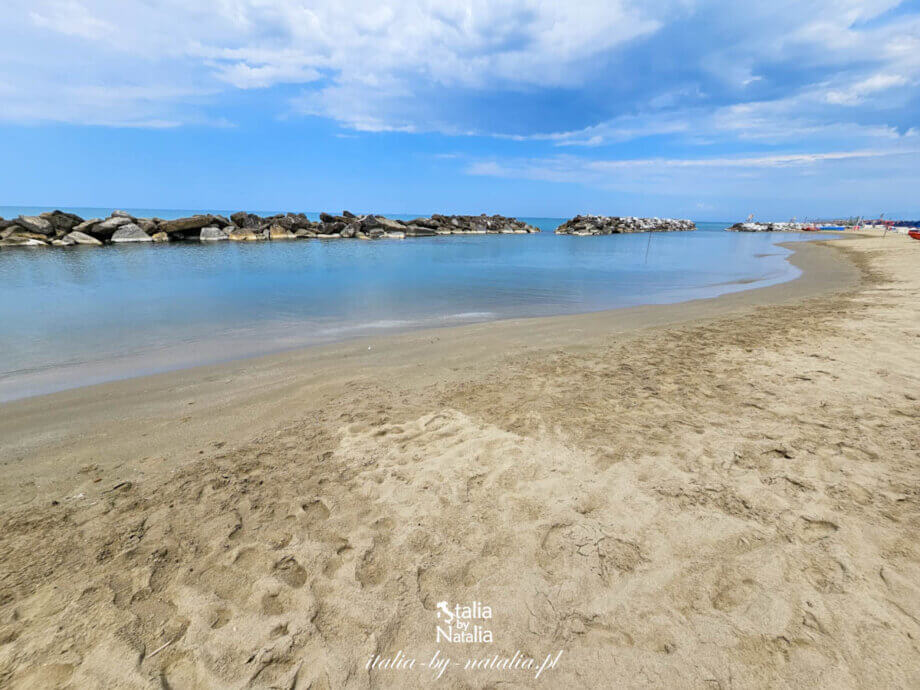
Small stone breakwaters were built just offshore to retain the sand. Over time, the beach here developed its distinctive crescent shape, with the breakwaters creating a series of sheltered sections. My first thought when I saw these beach clubs was that they would be ideal for families with young children. The calm, protected water is perfect for little ones to play in without the worry of larger waves, while the area also offers a full range of facilities.
You can get here by taking the direct number 10 bus from the area around Pisa railway station.
Beaches in Tirrenia
The beaches in Tirrenia are wide and sandy, and most are occupied by beach clubs offering sun loungers and restaurants. There are also several public sections, while a belt of Mediterranean vegetation stretches behind the beach. It is a good choice for families with children and travellers looking for a traditional seaside resort with a full range of facilities.


However, if you are dreaming of wild scenery and an unspoilt coastline, Tirrenia is not the right place for a seaside holiday.
Beaches in Calambrone
South of Tirrenia, the landscape gradually begins to change. Calambrone also has wide sandy beaches, but the area is less densely developed, and stretches of dunes and the Tombolo pine forest, part of the Migliarino, San Rossore and Massaciuccoli Regional Park, have survived between the buildings. In recent years, many former holiday complexes dating from the 1930s have been restored and converted into hotels and apartment buildings, helping the resort regain its seaside holiday atmosphere.
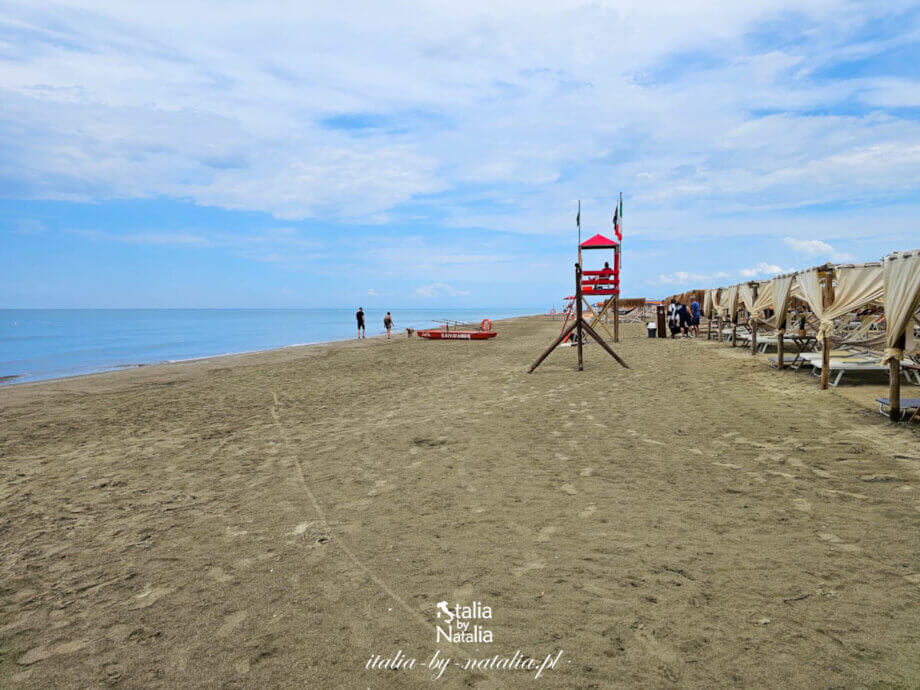

The beaches are spacious, and thanks to favourable wind conditions, Calambrone is popular with windsurfers and sailing enthusiasts. It is a quieter alternative to Tirrenia, although in terms of scenery it still cannot compete with the most picturesque stretches of the Tuscan coast further south. The downside? Looking south, the huge cranes and industrial buildings of the Port of Livorno are clearly visible.
Attention, dog owners! In Calambrone, you will find two organised beach clubs that are genuinely dog-friendly. Dogs are not merely tolerated there, but warmly welcomed. You can find more information on the beach clubs’ websites: Single Fin Dog Beach and Dog Beach Solidago.
Beaches in Central Tuscany: The Province of Livorno (Costa degli Etruschi)
The central stretch of the Tuscan coastline, extending from the area around Castiglioncello to Piombino, is known as Costa degli Etruschi (the Etruscan Coast)—and for good reason. Thousands of years ago, this was one of the most important centers of the Etruscan civilization. Today, its most remarkable legacy can be explored in Populonia and the vast Baratti and Populonia Archaeological Park. The name Costa degli Etruschi primarily refers to the coastal strip within the Province of Livorno. From a tourism perspective, however, it also includes several inland towns and rolling hills that have been closely connected with this historic region for centuries.
Costa del Romito
South of Livorno, the landscape changes dramatically. Wide sandy beaches give way to the rugged coastline of Costa del Romito, characterized by rocky shores, hidden coves, and cliffs that are often difficult to access. In return, this stretch of the Tuscan coast offers exceptionally clear, crystal-clear water, typical of rocky shorelines. The main towns along Costa del Romito are Quercianella and Castiglioncello. The railway line runs almost directly along the coast, making the area easy to reach even without a car.
Beaches in Castiglioncello
In the elegant seaside town of Castiglioncello, the coastline is dominated by rocky shores, low cliffs, and small coves where sandy beaches blend seamlessly with natural rock formations. The most famous is Baia del Quercetano, although many of the other beaches in the area share the same distinctive character.

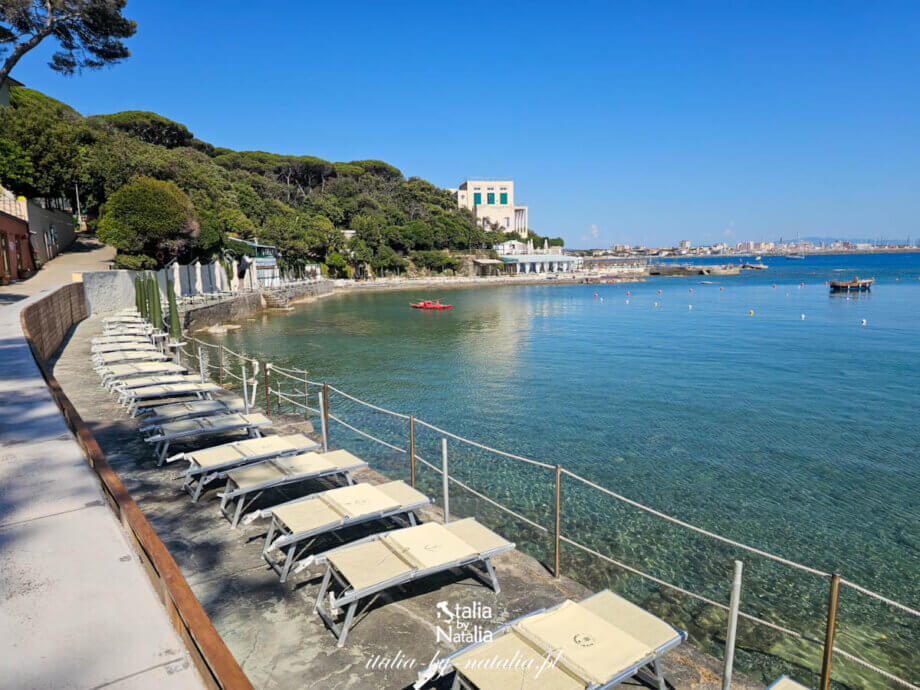


Some of these coves are occupied by beach clubs offering sun loungers and umbrellas, while on the flat rock terraces many visitors simply spread out their towels and enter the sea via the natural rock ledges. This part of the coast is especially appealing to those who enjoy secluded coves and rugged, rocky shorelines.
White Beaches in Rosignano Solvay
I’ve dedicated a separate article to this controversial topic. In short, if you’re looking for the most turquoise water on the Tuscan coast and the region’s only white-sand beach, you’ll find it here in Rosignano Solvay. The scenery is undeniably stunning, especially on a sunny day, but these striking colors are not a natural phenomenon—they result from the discharge of treated wastewater from the nearby chemical plant into the sea.
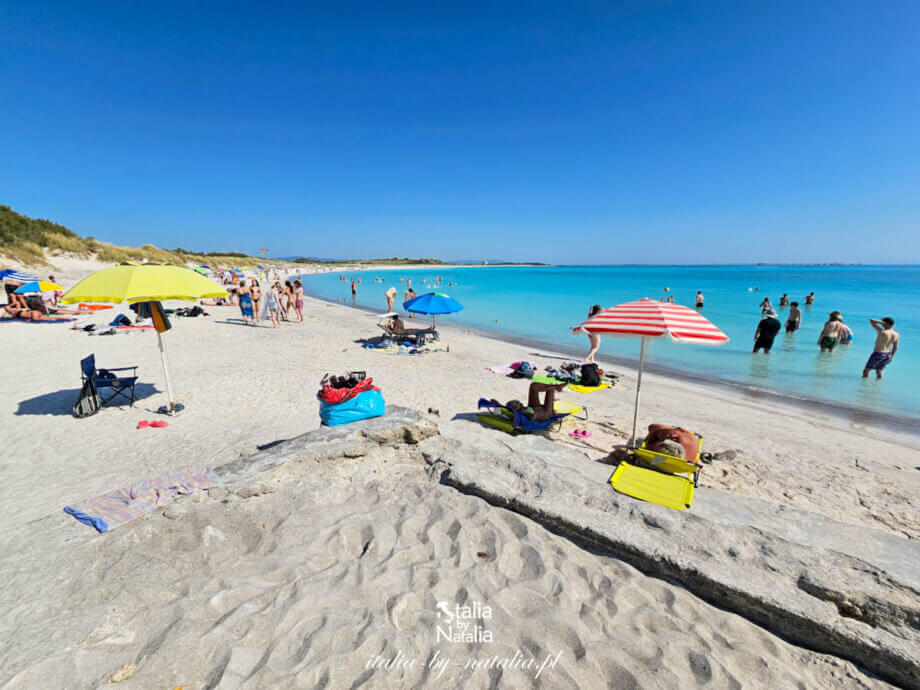
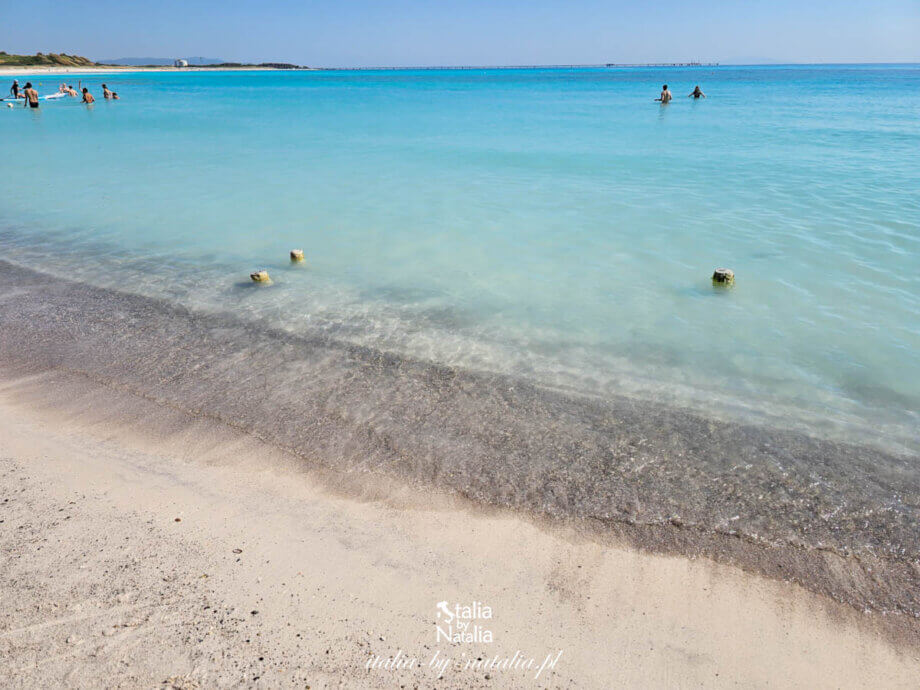
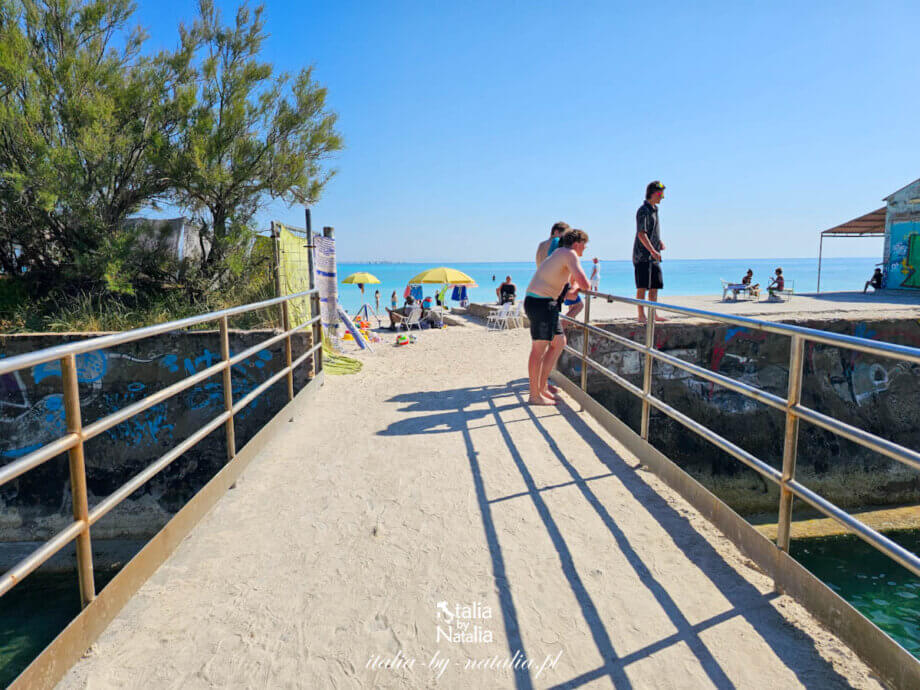

People are divided into two groups when it comes to this place: those who claim that there is nothing to worry about, have swum here for years, and are perfectly fine, and those who avoid the so-called “Chemical Caribbean” altogether. That is why, before visiting, be sure to read the article “White Beach in Rosignano Solvay – Is It Worth Visiting?” to get a complete picture of the situation.
Currently, just a few dozen metres from the northern entrance to the beach, there is a large and convenient car park. The photos above were taken at the end of May. As you can see, the place already attracts many visitors, and during the summer season it becomes truly crowded.
Marina di Vada Beach
Marina di Vada Beach is a sandy stretch of coastline featuring both free public areas and beach clubs with sun loungers and umbrellas. The gently sloping seabed makes this spot especially popular with families with children.


Marina di Vada also offers good tourist infrastructure, numerous campsites nearby, and convenient access, making it a good choice for those planning a longer stay by the Tuscan sea. However, I personally liked another beach much more, located just next to it to the south.
Vada Mazzanta Beach
Located a few kilometres south of Marina di Vada, Vada Mazzanta Beach has a much more peaceful atmosphere. It is a great choice for those who enjoy pine forests and are looking for tranquillity and more open space. This long stretch of coastline features relatively light-coloured sand (especially compared with other beaches in Tuscany), with alternating sections of free public beach and beach clubs. The sea remains shallow for a considerable distance from the shore, making it a perfect option for families with children as well as for those who enjoy long walks along the coast.

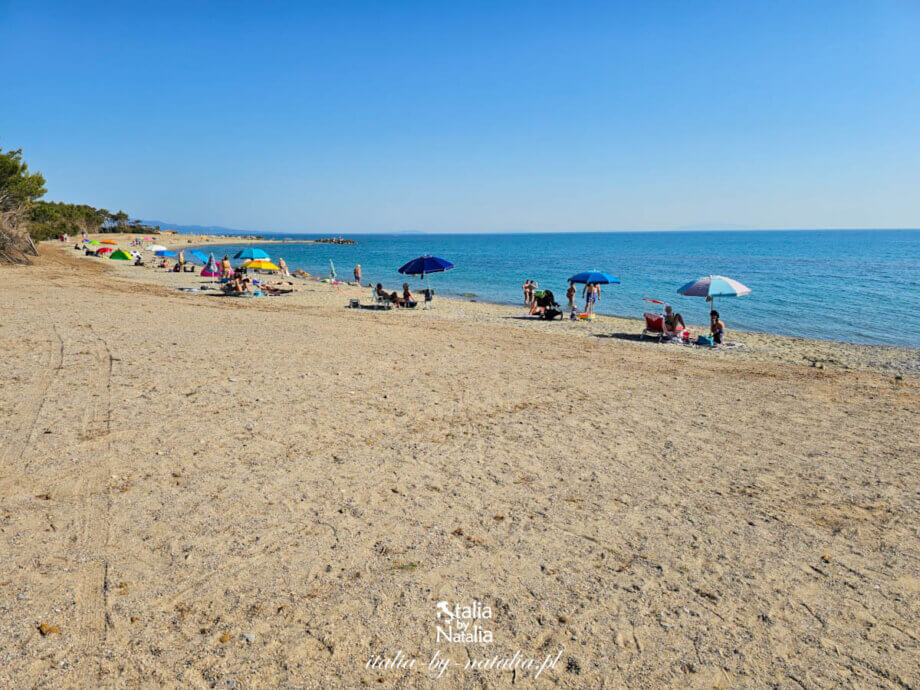
For me, one of the greatest advantages is the wide belt of beautiful pine forest stretching along the entire coastline of Mazzanta, with broad paths that are perfect for walking and cycling.
Beaches in the Tomboli di Cecina Nature Reserve
Between Marina di Cecina and Marina di Bibbona lies the most beautiful section of the much larger Tomboli di Cecina Nature Reserve. This approximately five-kilometre stretch of coastal pine forest, dunes, and natural beaches is one of the most valuable natural areas along the Costa degli Etruschi.
Definitely one of the best beach destinations in the Province of Livorno.
The forest is crisscrossed by a network of paths, wide avenues, and marked walking and cycling routes, including an approximately 10-kilometre Nordic walking trail. An interesting fact is that the stone pines growing here were planted in the 19th century on the orders of Grand Duke Leopold II to protect inland farmland from salty sea winds. What was originally intended as a purely practical measure has today become a valuable landscape feature, a habitat for many species of wildlife, and a major attraction for visitors.

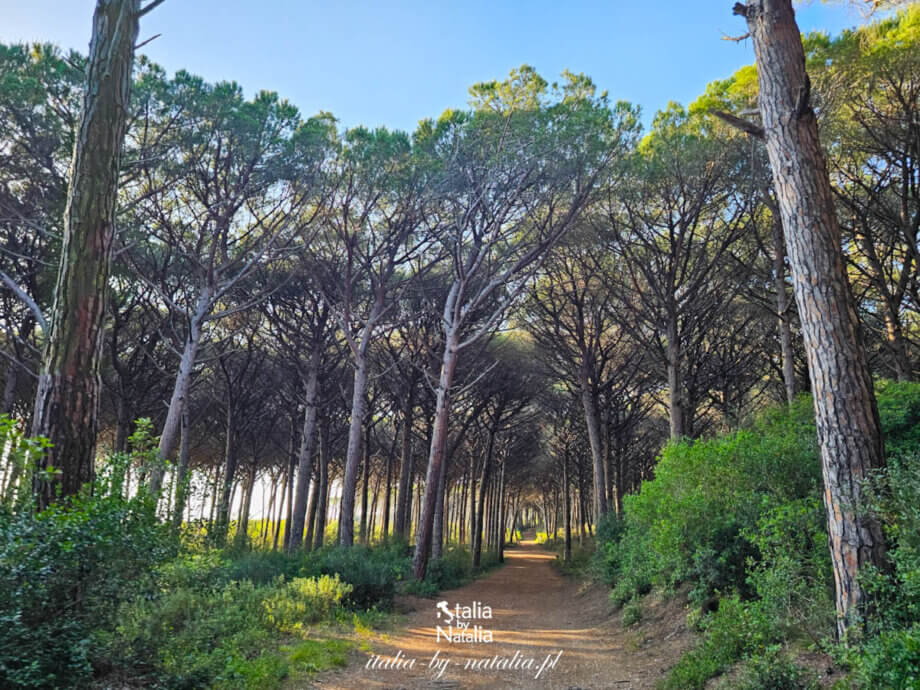
The beaches within the reserve have a completely different character from those found in seaside resorts. They are wide and sandy, with some sections containing a mix of sand and gravel. There are no sun loungers or beach bars here. Fallen trees, branches, and pieces of driftwood washed ashore by the sea are left in place, allowing the beach to preserve its natural, untouched appearance.


At the same time, the entire area is very well organized. The entrances are numbered, which makes it much easier to find your way around, especially since many of the paths lead through a similar landscape. In several places, there are small changes in elevation between the forest and the beach. They are not high, but visitors with bicycles or baby strollers should keep this in mind.
Marina di Bibbona
Marina di Bibbona is a very interesting seaside town surrounded by greenery. Here, a wide sandy beach gives way to dunes covered with Mediterranean vegetation and a vast pine forest stretching both northwards (towards the Tomboli di Cecina Nature Reserve) and southwards towards the Oasi di Bolgheri.
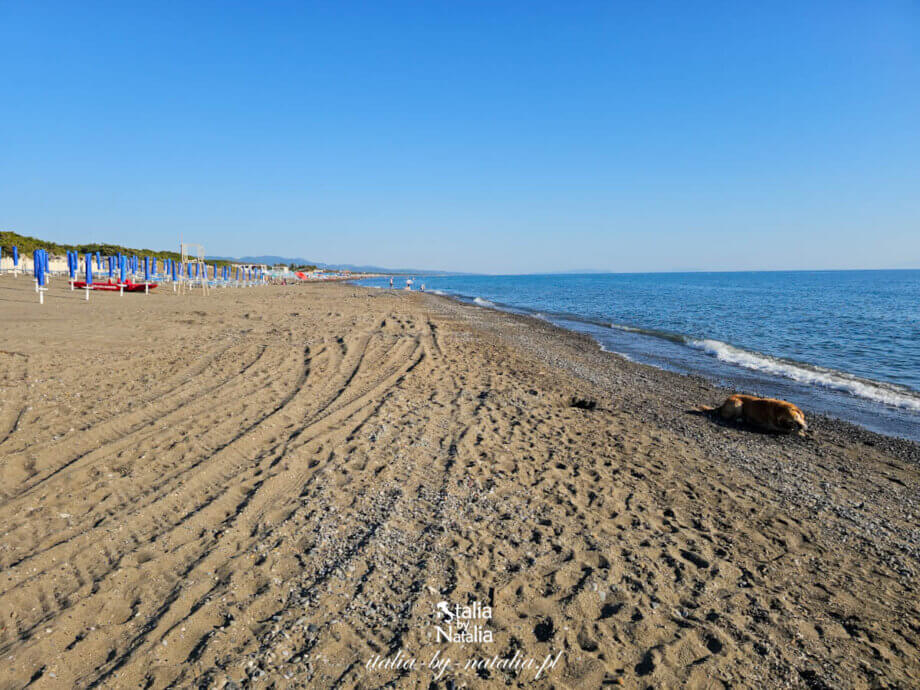
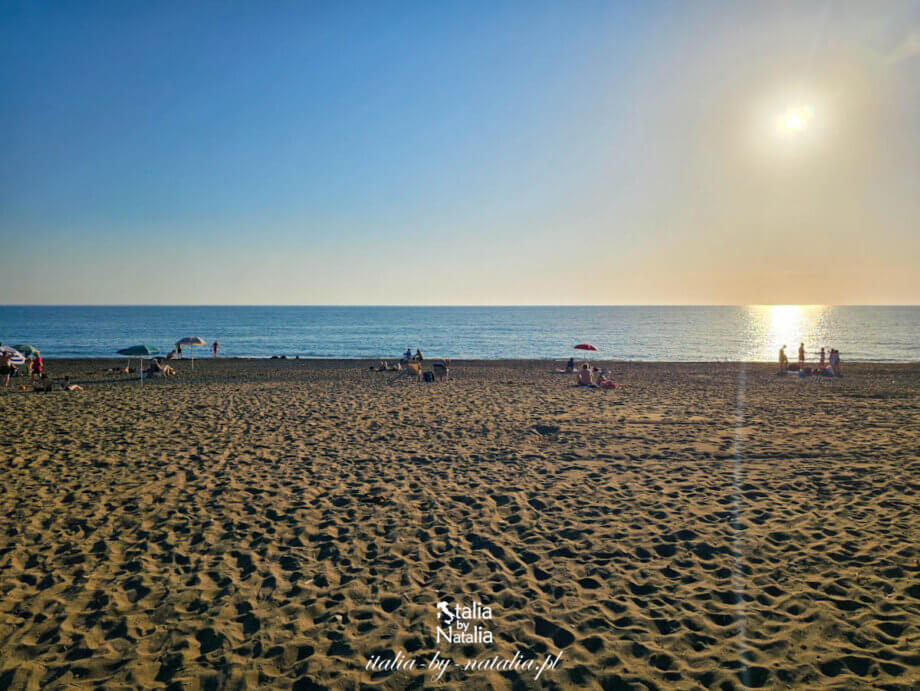
The beach is long and varied, with undeveloped sections alternating with beach clubs offering sun loungers and umbrellas. The seabed slopes gently into the sea, making it a great choice for families with children, as well as for those who enjoy long walks along the shore, exploring pine forests, and cycling trips.
Oasi di Bolgheri
South of Marina di Bibbona lies Oasi di Bolgheri, the oldest WWF oasis in Italy. It protects dunes, wetlands, forests, and habitats of numerous bird species. Along its western boundary stretches a wide, sandy beach with a natural character, free from dense development.

It is one of the best places on the Costa degli Etruschi for those who value peace and want to relax away from large seaside resorts. Unfortunately, the interior of the oasis is not open for independent exploration. It can only be visited during guided tours organized by WWF.
Marina di Castagneto Carducci
Marina di Castagneto Carducci is a peaceful seaside town surrounded by a dense pine forest, or rather, partly built right within it. The local beach is sandy, wide, and stretches along the edge of the forest. Visitors can choose between fully equipped beach clubs and long stretches of undeveloped public beach.

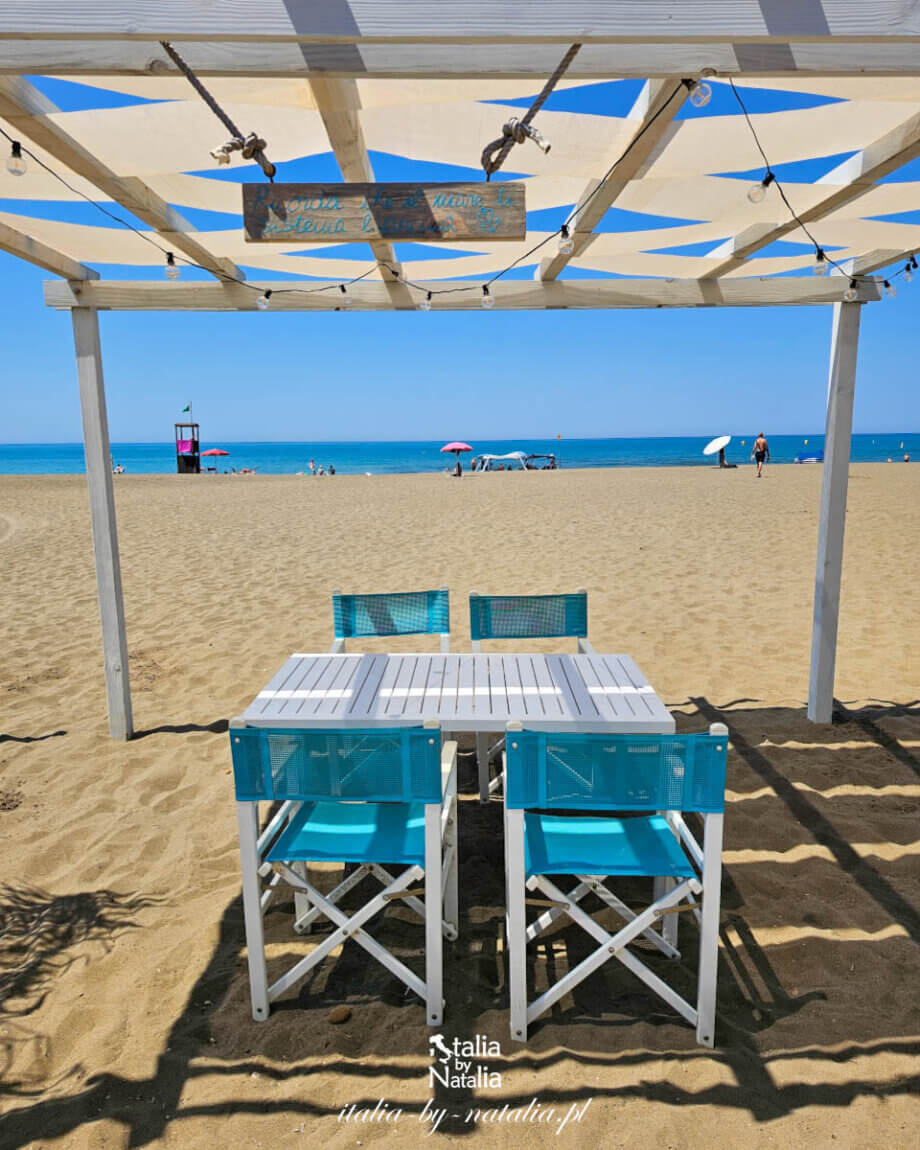

The area is also famous for its sea lilies, which bloom here in summer, while the shade provided by pine trees along many streets makes walking during the hottest hours of the day much more pleasant than in other seaside resorts. Nearby, you should definitely visit the town of Bolgheri, renowned for its high-quality wines, typically Tuscan architecture, and its impressive, exceptionally long cypress avenue.
Dog Beach Castagneto Carducci
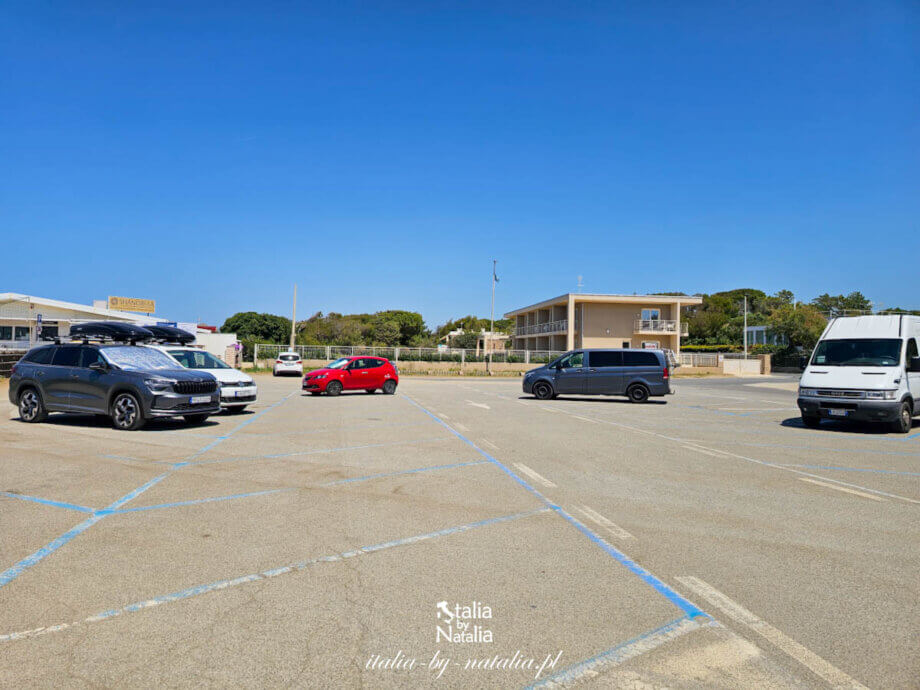
If I wanted to strictly follow the order of beaches from north to south, I should have included this section before Marina di Castagneto Carducci, but that would not be very logical. The local dog-friendly beach is located about one kilometre north of the town centre (right next to the border of Oasi di Bolgheri) and is exceptionally well organized.
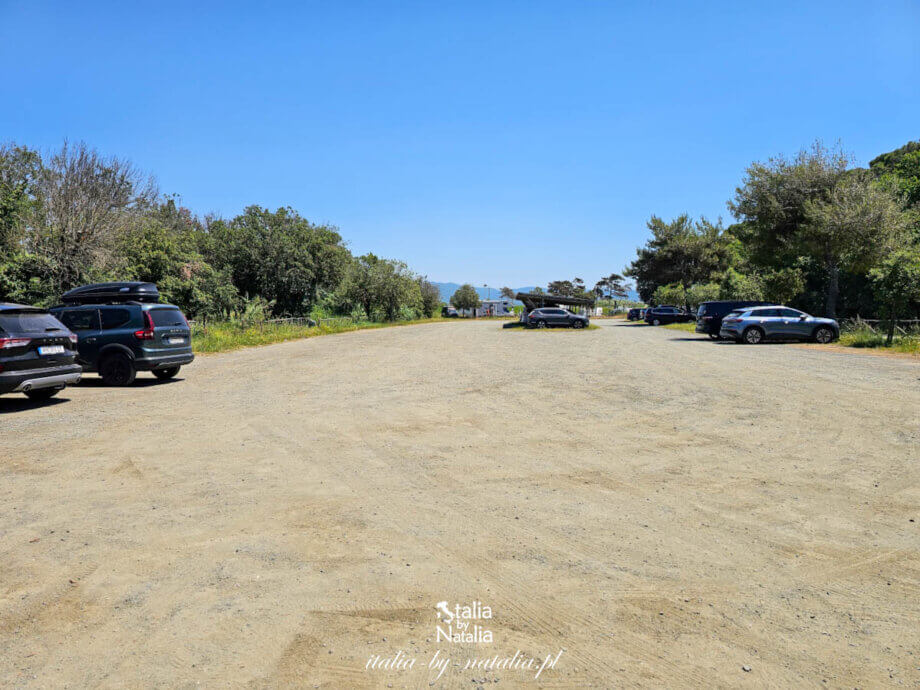

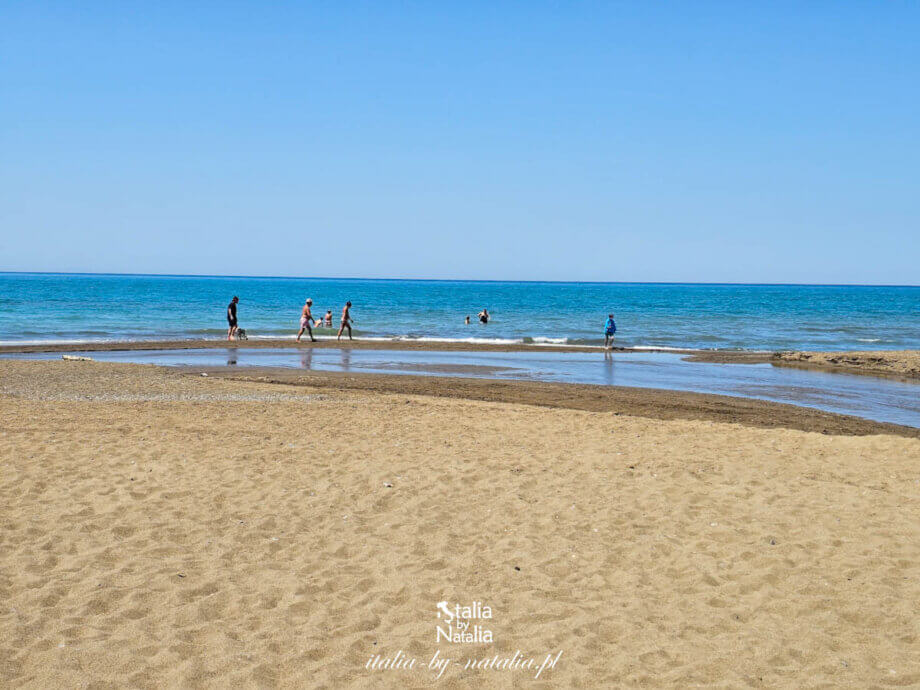
At the end of the access road, there is a large unpaved car park, from where it takes only about 150 metres to reach the beach. It may not be the most beautiful beach on the Costa degli Etruschi, but it does offer food facilities. The fine sand is mixed with a small amount of gravel, which is typical for this stretch of the Tuscan coastline.
Pianetti Beach
Pianetti Beach is one of the longest and most natural stretches of coastline on the Costa degli Etruschi. It extends south of Marina di Castagneto Carducci, where a wide strip of golden sand borders a pine forest and Mediterranean vegetation. There is no dense development or seafront promenade here, which means that even during the high season it is possible to find a peaceful spot away from the crowds.
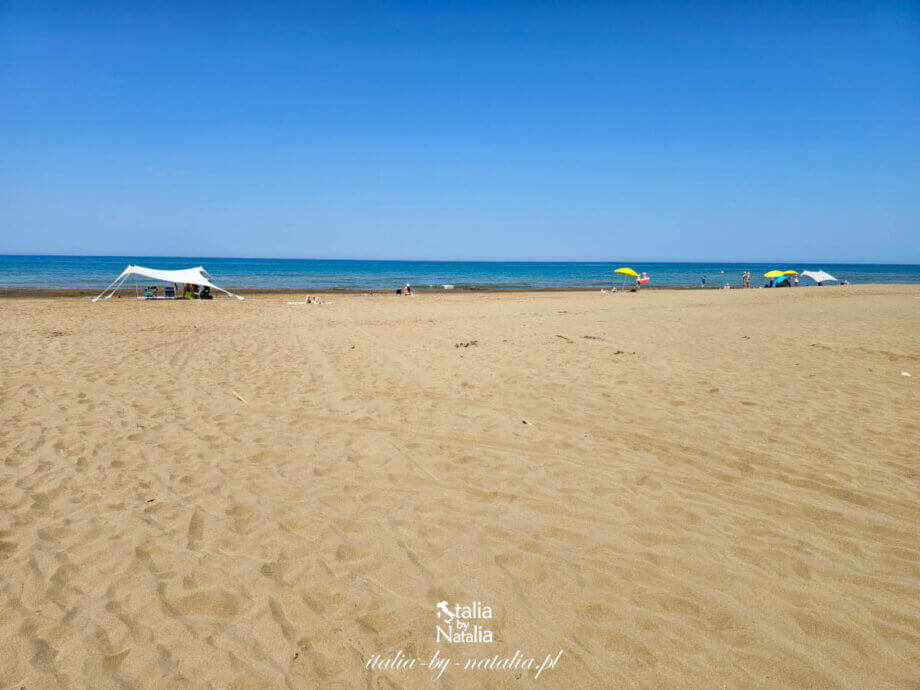

Pianetti is a great choice for those who appreciate long walks along the seashore, close contact with nature, and a less commercial atmosphere than the one found in nearby resorts. Walking south along the beach, you can reach the northern outskirts of the town of San Vincenzo.
The Town of San Vincenzo
San Vincenzo is the largest and liveliest seaside resort in the southern part of the Costa degli Etruschi. Its several-kilometre-long beach with fine, light-coloured sand combines well-equipped beach clubs with long stretches of public beach, while a belt of pine forest stretches just behind the shoreline. The town is an excellent choice for those who want to combine a seaside holiday with convenient access to restaurants, shops, and a waterfront promenade.


A major advantage of San Vincenzo is also its train station, located in the town centre, with direct connections to destinations such as Pisa, Livorno, Florence, Grosseto, and Rome. This makes it easy to plan day trips and even reach the town conveniently from the airport.
Rimigliano Beach
Rimigliano Beach stretches along the Parco Naturale di Rimigliano and is considered one of the most beautiful natural beaches in the southern part of the Costa degli Etruschi. A wide strip of fine, relatively light-coloured sand is separated from the road by dunes, pine forest, and Mediterranean vegetation, which means that even in the peak season you can still find quieter spots and shaded areas here.


Despite its natural character, the beach is well equipped. Showers and toilets are available near the main entrances, and a road with designated parking spaces runs along the entire beach. It is also an excellent place for long walks.
Baratti Bay Beach
Baratti Bay Beach stands out not only for its crystal-clear water but also for its fascinating history. The darker shade of the sand is the result of iron particles present in the area and serves as a reminder of the times when the Etruscans smelted iron ore brought from the nearby island of Elba here. The beach is surrounded by a pine forest and remains largely open to the public. Right next to it lies the Baratti and Populonia Archaeological Park, with the remains of the only Etruscan city built directly on the seashore.


Parts of Baratti Bay are surrounded by stretches of relatively sparse pine forest, making many of the paths leading to the beach truly picturesque. On hot days, some visitors choose to relax not on the sand, but among the trees instead.
Beaches in the Sterpaia Nature Reserve
The Parco Costiero della Sterpaia protects nearly 300 hectares of dunes, wetlands, forests, and coastal vegetation, creating one of the most valuable natural areas on the Costa degli Etruschi. Along the reserve stretches a wide, sandy beach divided into several sections, with convenient access points leading through wooden boardwalks that protect the fragile dune ecosystem.
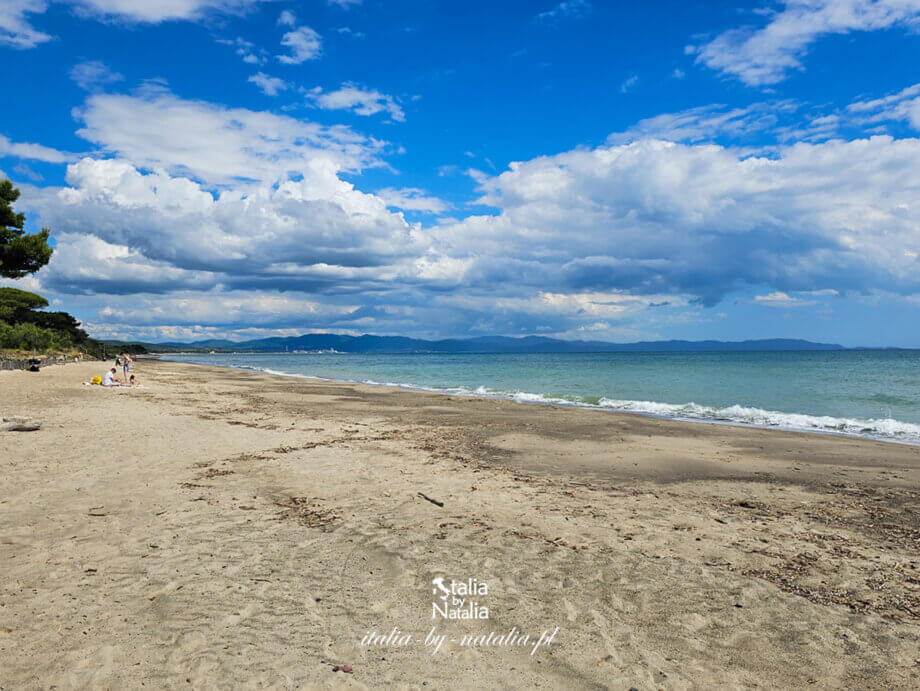
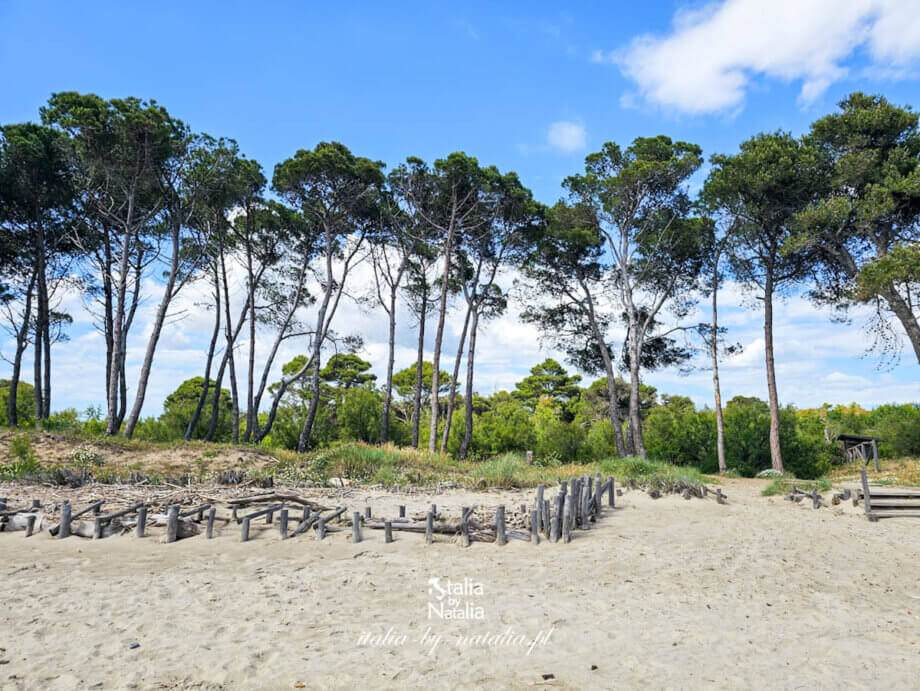
Despite its popularity, the area has preserved its natural character, and thanks to the extensive coastline, it is still easy to find a quieter stretch of beach here, even during the high season. It is also one of the best-equipped beaches for people with disabilities. Selected access points feature dedicated facilities that make reaching the sea easier.
Definitely one of the best beach destinations in the Province of Livorno.
At the western end of the beach, there is a section reserved for dogs, including a dedicated dog-friendly beach area. More information can be found on the Bagno Pascià website.
Beaches of Southern Tuscany: Grosseto Province (Maremma)
The southern coast of Tuscany, located in the Maremma area, is my personal favourite. Why? There are several reasons. I value nature, peace and quiet, as well as fewer fellow beachgoers more than the most luxurious seaside resorts. There are relatively few of the latter in Maremma, while wild, protected beaches are more abundant here than anywhere else along the Tuscan coastline.
The Maremma coastline is also remarkably diverse, ranging from kilometres of sandy beaches backed by pine forests and dunes, to secluded coves hidden beneath dramatic cliffs, and the Monte Argentario peninsula, renowned for its crystal-clear waters and rugged rocky coastline.
Beaches in Follonica
The first major seaside town in Maremma is an excellent destination, especially for travellers without a car. It is served by direct train connections, and the beach is just a 600-metre walk from the railway station. The beach itself is truly beautiful—long, wide, and covered with relatively light-coloured sand.

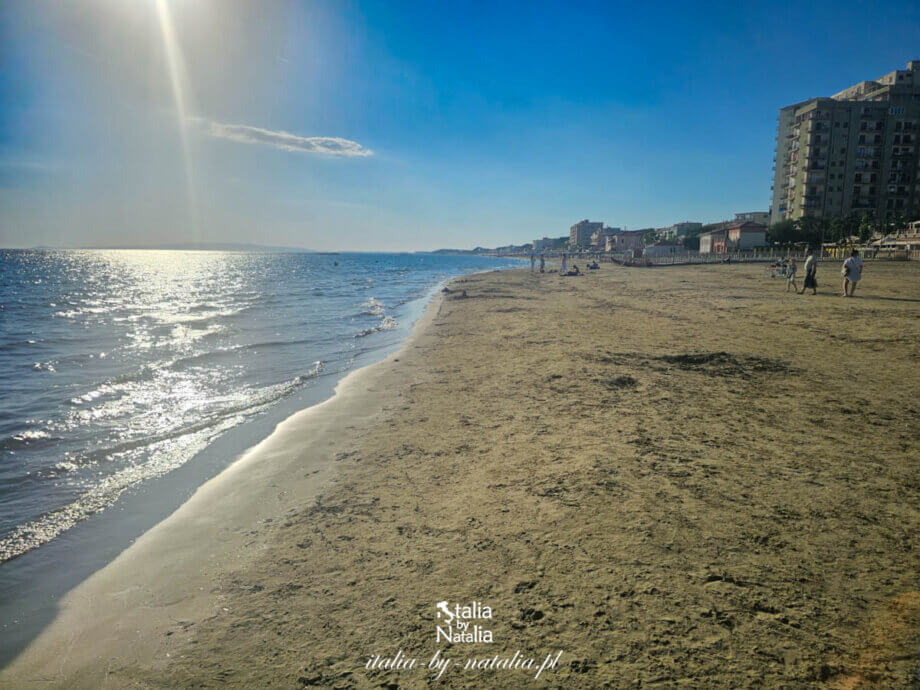
If, however, you prefer a more natural setting, simply head south of the town, where the very same beach takes on a completely different character.
The Beach Between Follonica and Puntone
A very beautiful beach stretches for kilometres all the way to Puntone. Between the beach and the road running parallel to the coastline towards the south, you will find several large car parks as well as numerous roadside parking spaces. Many of them are shaded. Some sections of the forest are fenced off as private property, but wooden paths have been built through the publicly accessible areas.
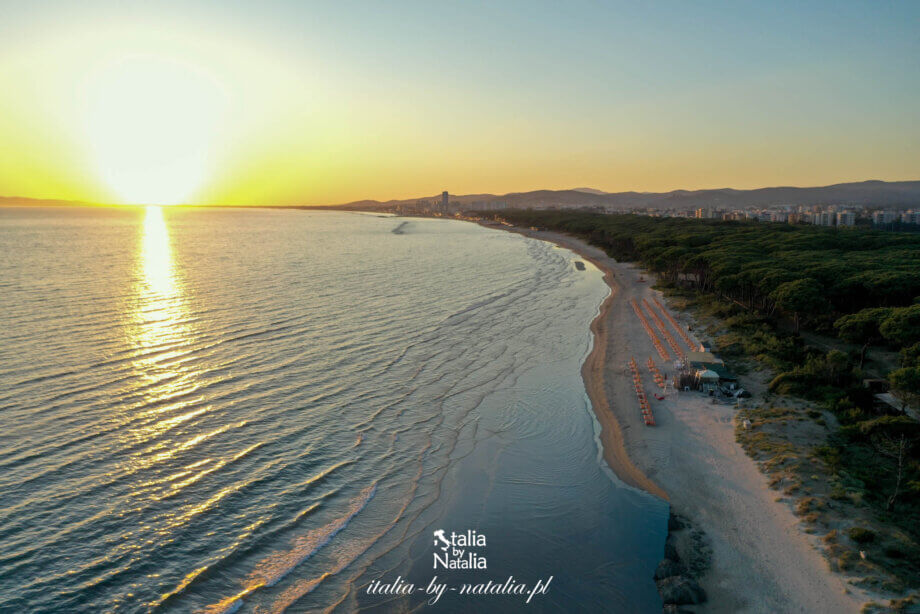
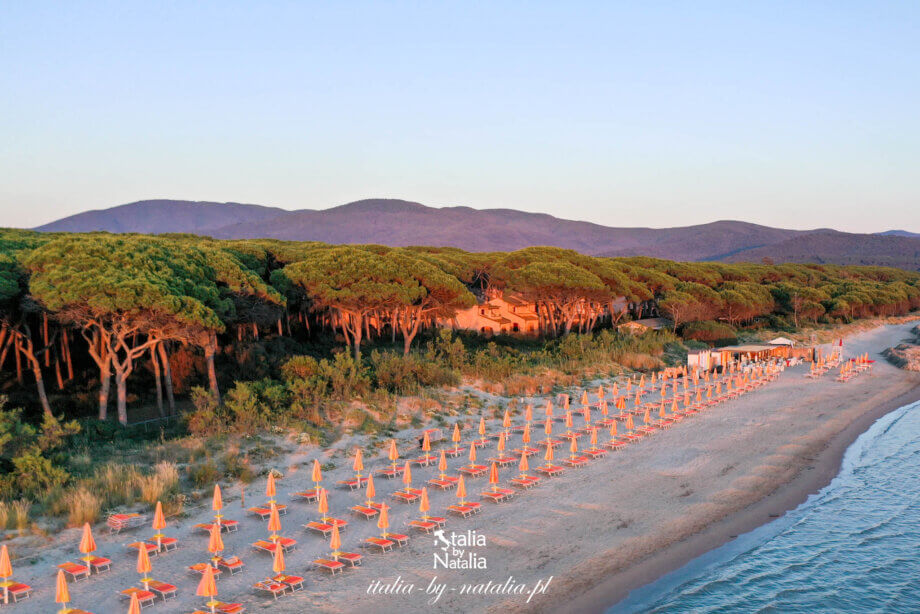
At the southern end of this beach, a section reserved for dogs has been designated.
Beaches in the Bandite di Scarlino Nature Reserve (Cala Violina and Cala Civette)
One of the most beautiful stretches of the Tuscan coastline is protected as the Bandite di Scarlino Nature Reserve. It includes Cala Violina, widely considered the most beautiful beach in Tuscany. What is more, it is covered with exceptionally light-coloured sand, and the colour of the water here is the closest to a true turquoise shade.
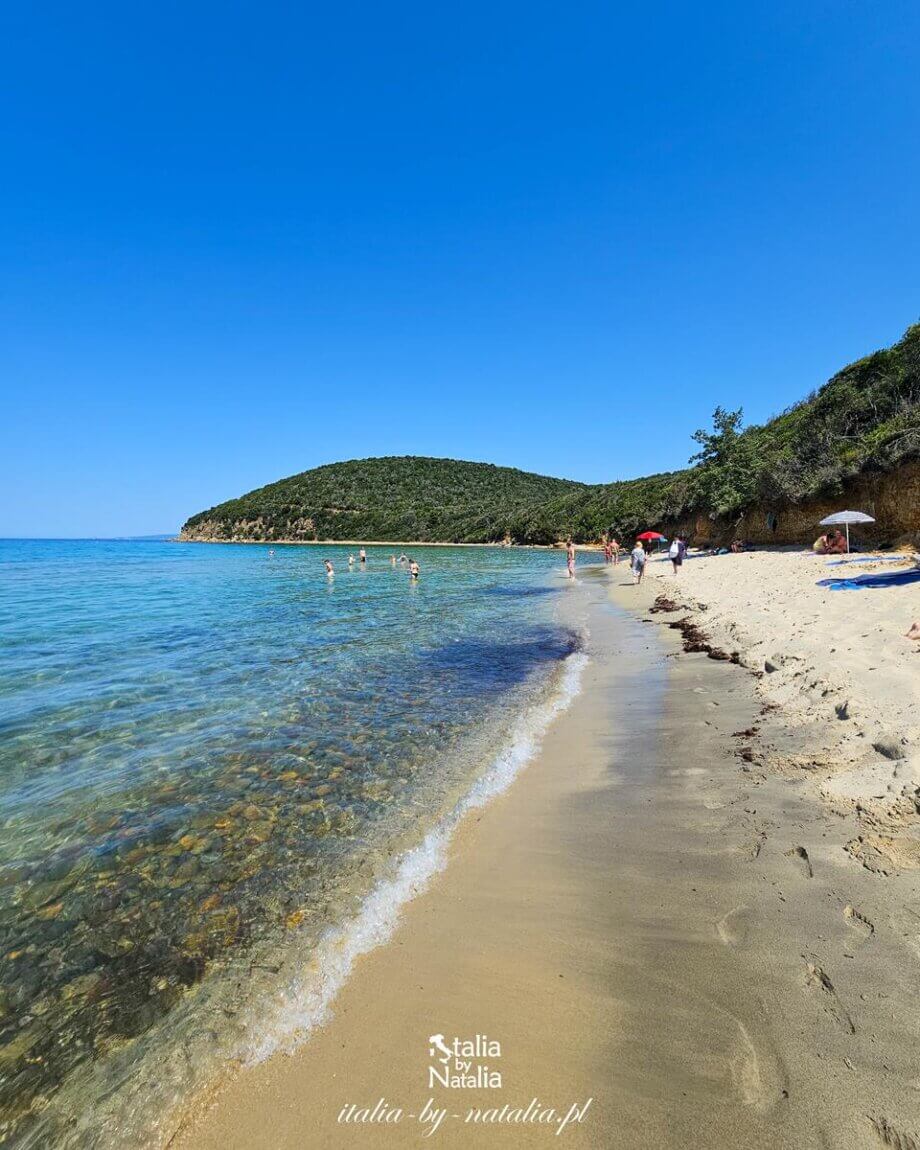
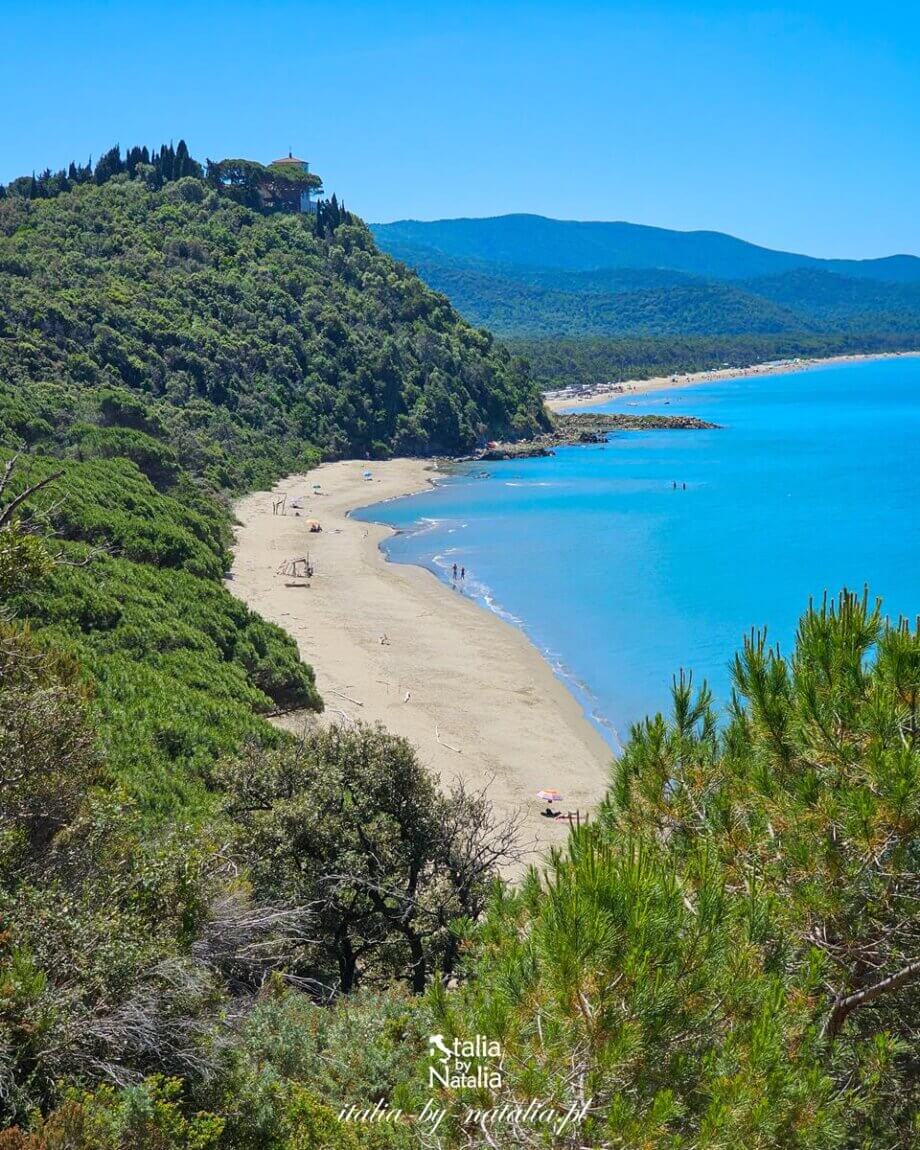
Definitely one of the best beach choices in the province of Grosseto.
You cannot enter the reserve by car. There are hiking and cycling trails, as well as numerous restrictions and regulations in place. I have described this topic in detail in my article about Marina di Scarlino.
Casetta Civinini (Piastrone) Beach
Casetta Civinini Beach, with its southern section also known as Piastrone, is one of the most beautiful stretches of coastline between Follonica and Punta Ala. It features a wide beach with fine, light-coloured sand, a gently sloping seabed, and a vast pine forest on the landward side. During the high season, beach clubs with restaurants operate along the coast, yet a significant part of the beach remains undeveloped.

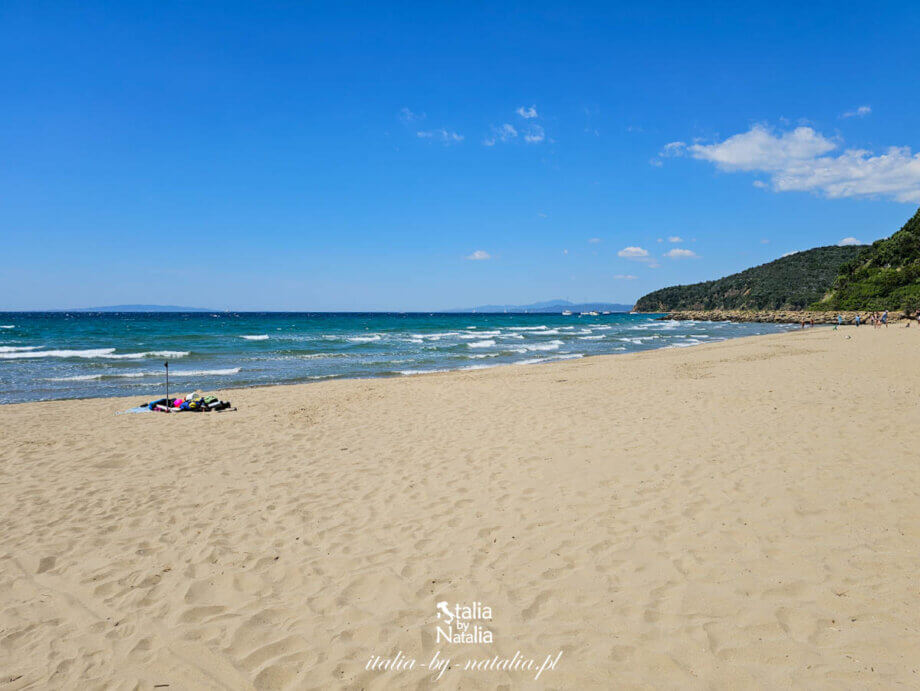
In the northern part of Casetta Civinini (just beyond the Bandite di Scarlino Nature Reserve, as shown in the photos above), right by the beach, there is the beautiful PuntAla Camp & Resort, set within a pine forest. It offers both mobile homes and pitches for motorhomes and caravans.


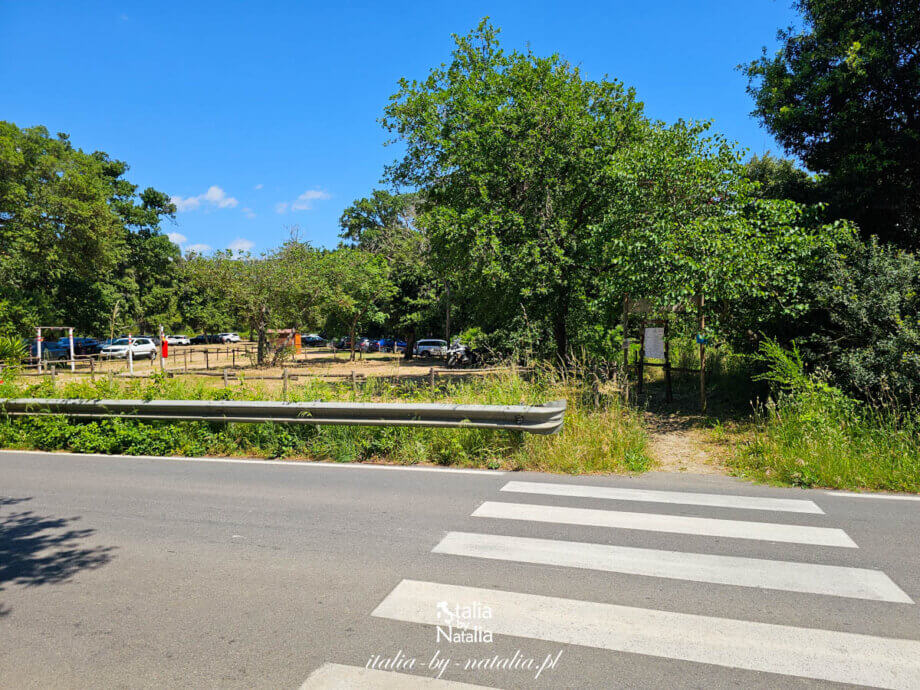
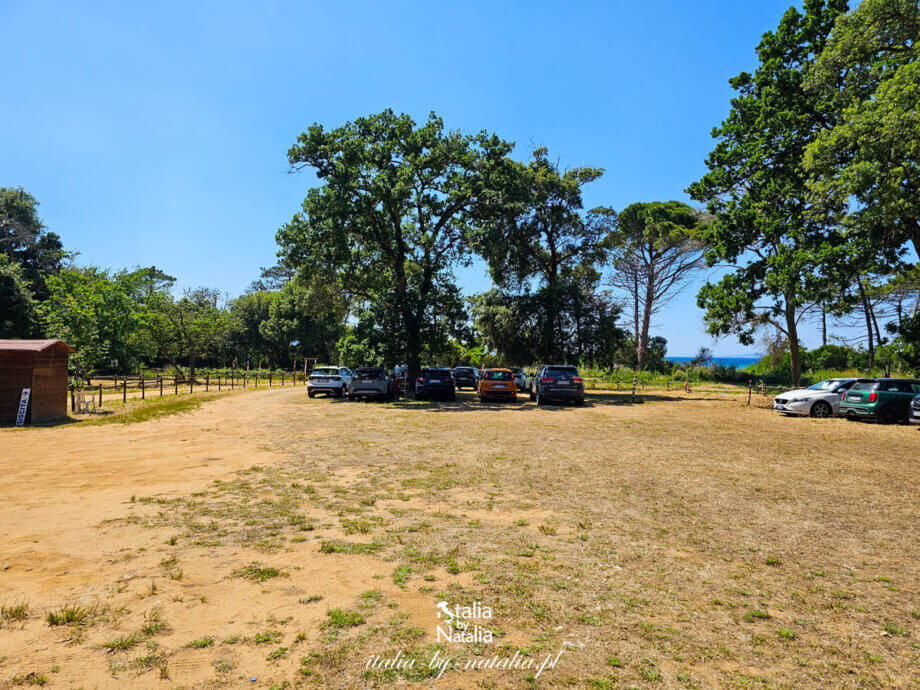
Further south, but before reaching Punta Ala (as shown in the photos above), you will find car parks and paths leading to the beach along the road that runs beside Casetta Civinini.
Beaches in Punta Ala
Punta Ala is famous for its beautiful sandy beaches and crystal-clear waters, but it has a completely different character from most seaside towns in Maremma. It is an elegant resort with a marina, a golf course, high-quality hotels, and private villas, long associated with a more exclusive style of holiday.
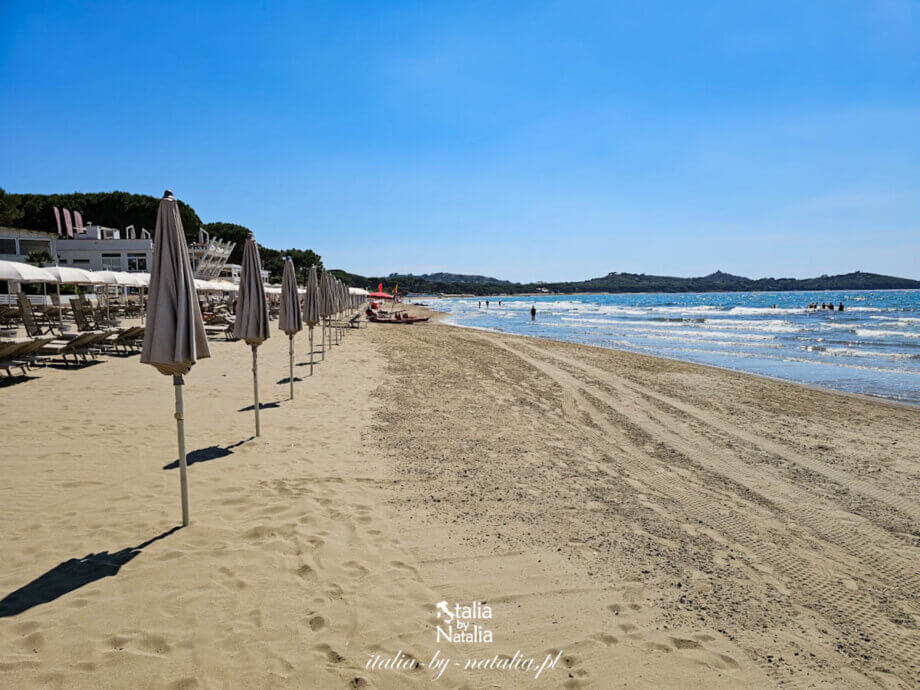
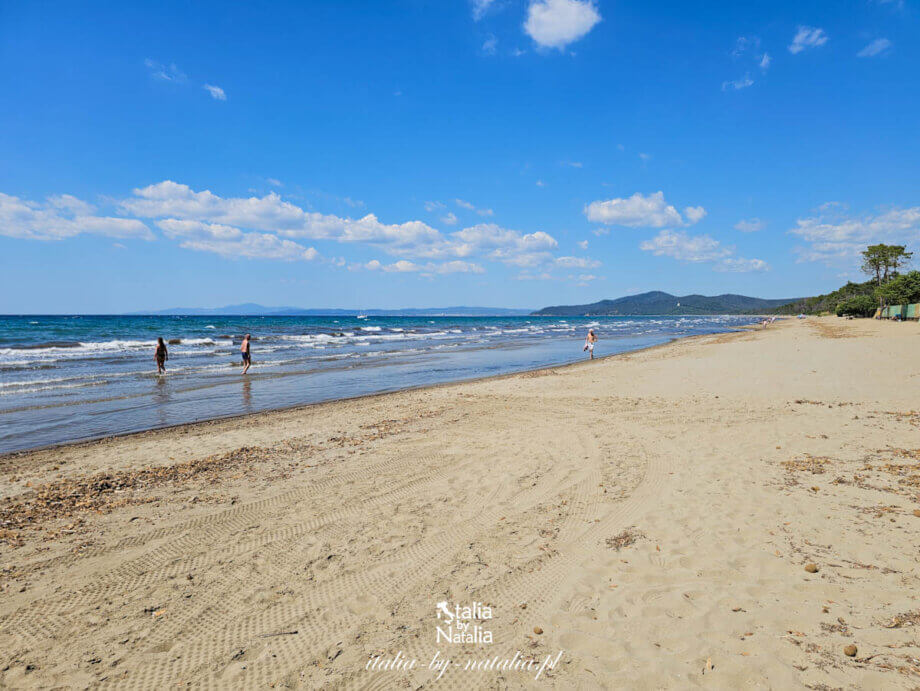
Along the coastline, you will find both long sandy beaches and small secluded coves, including Cala Barbiere, Cala Tartana, and Cala Tartanella. In practice, visitors coming only for a day trip will find it more convenient to use the beaches located just before Punta Ala, where access and parking are easier.
Le Rocchette Beach
Le Rocchette Beach stretches at the foot of a rocky headland topped by Forte delle Rocchette, a former Medici fortress from which the beach takes its name. The beach is wide, sandy, and surrounded by pine forest. It is washed by exceptionally clear water and, despite its popularity, remains a truly peaceful place. The road leading here ends at a roundabout at the foot of the cliff, so only visitors specifically interested in the beach tend to come here.
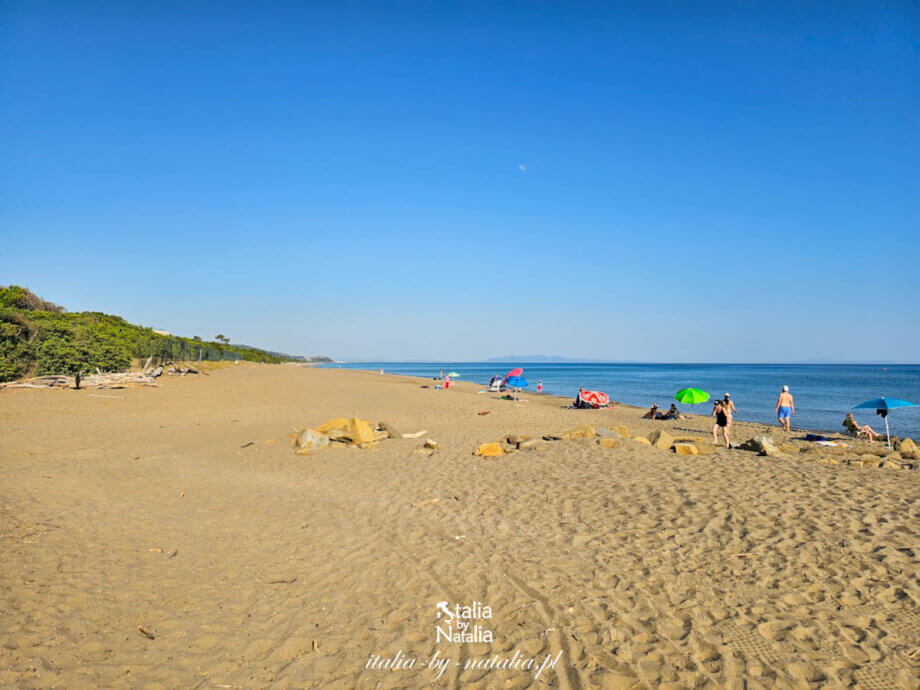

The gently sloping shoreline makes this beach a great choice, especially for families with children. Along the coast, you will find both well-equipped beach clubs and sections of free public beach. It is also worth visiting the aforementioned headland with the fortress, which offers beautiful views over the Maremma coastline and the nearby islands of the Tuscan Archipelago.
Beaches Between Le Rocchette and Castiglione della Pescaia, Including Roccamare and Riva del Sole
Between Le Rocchette Beach and the centre of Castiglione della Pescaia stretches more than five kilometres of sandy coastline, with a pine forest behind it and well-preserved dunes.


Its most distinctive feature is the rocky headland of Punta Capezzolo, which briefly interrupts the continuous stretch of beach and serves as an excellent viewpoint over the surrounding coastline. Apart from this, the area is dominated by wide sandy beaches with a gently sloping seabed and clear water.
Beaches in the Centre of Castiglione della Pescaia
The beaches in the centre of Castiglione della Pescaia stretch on both sides of the harbour and are among the most developed beaches along the entire Maremma coastline. A wide strip of light-coloured sand, a gently sloping seabed, and numerous beach clubs with full facilities make this an excellent choice for families with children. There are also plenty of public beach areas, a promenade, restaurants, bars, and ice cream shops. I especially recommend the delicious gelato at Cremeria Corradini.
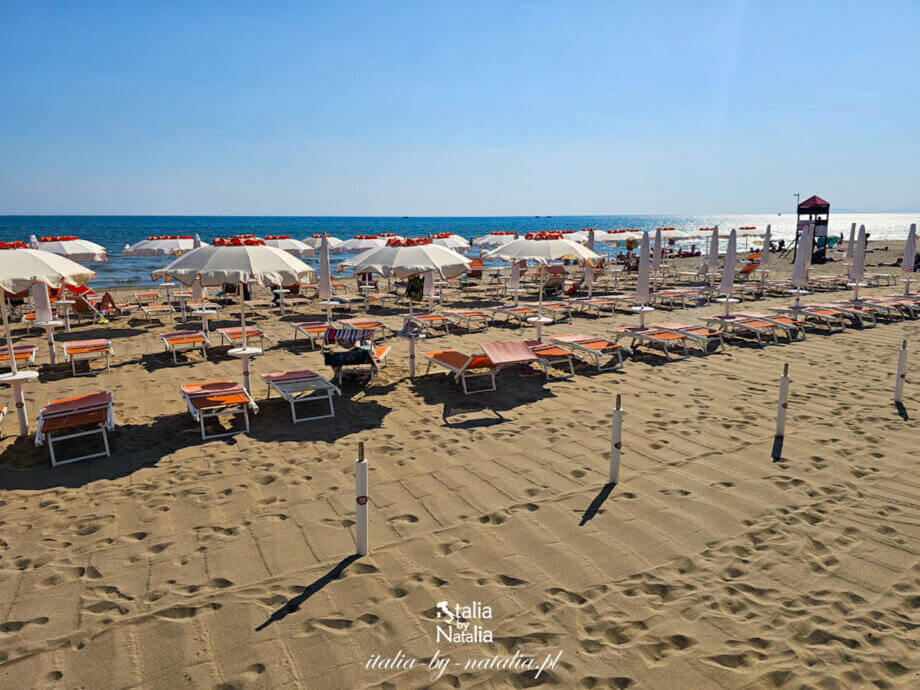
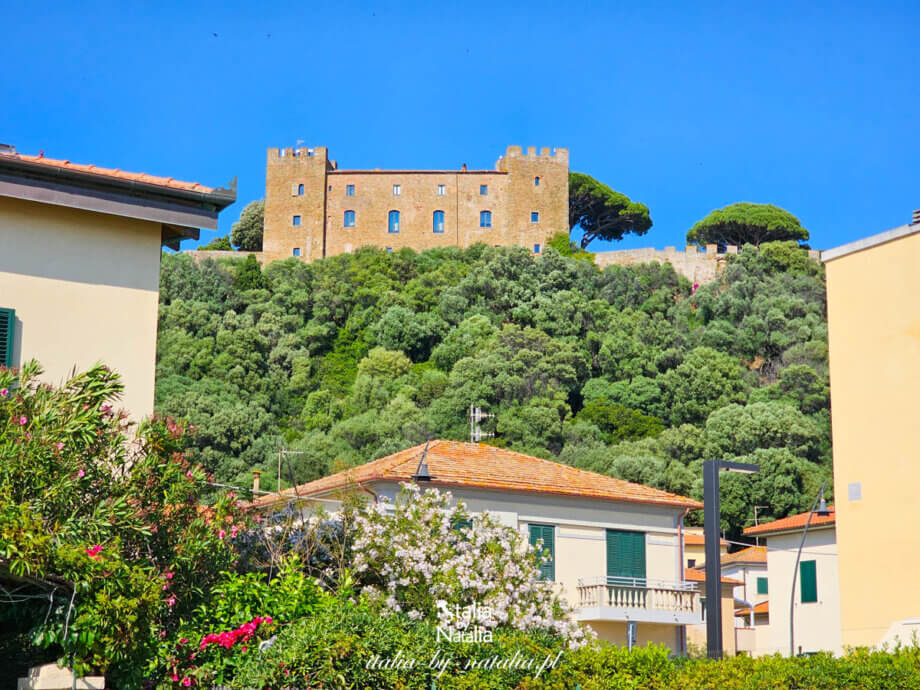
The medieval old town with its fortress rises above the seaside resort, inviting visitors to take a stroll through its charming streets. For many years, the beaches of Castiglione della Pescaia have regularly received the Blue Flag award as well as top recognitions from Legambiente for water quality and environmental protection.
Marina di Grosseto Beach
Marina di Grosseto is one of the most popular seaside resorts in Maremma. Kilometres of wide, sandy beaches with a gently sloping seabed have made it a favourite destination for families with children and water sports enthusiasts for many years.

A pleasant and convenient walking and cycling route connects Marina di Grosseto with the city of Grosseto as well as with the seaside resort of Principina a Mare.
Principina a Mare Beach
Principina a Mare is located on the northern border of the Parco Naturale della Maremma and stands out because almost all of the town’s buildings are hidden among the pine trees of the Pineta Granducale forest. The wide beach with light-coloured sand has a largely natural character.


Among the dunes and Mediterranean vegetation, you can often see tree trunks washed ashore by the sea, which have become one of the symbols of this coastline. The gently sloping seabed and extensive stretches of public beach make it one of the best places in the area for a peaceful holiday close to nature.
Marina di Alberese Beach
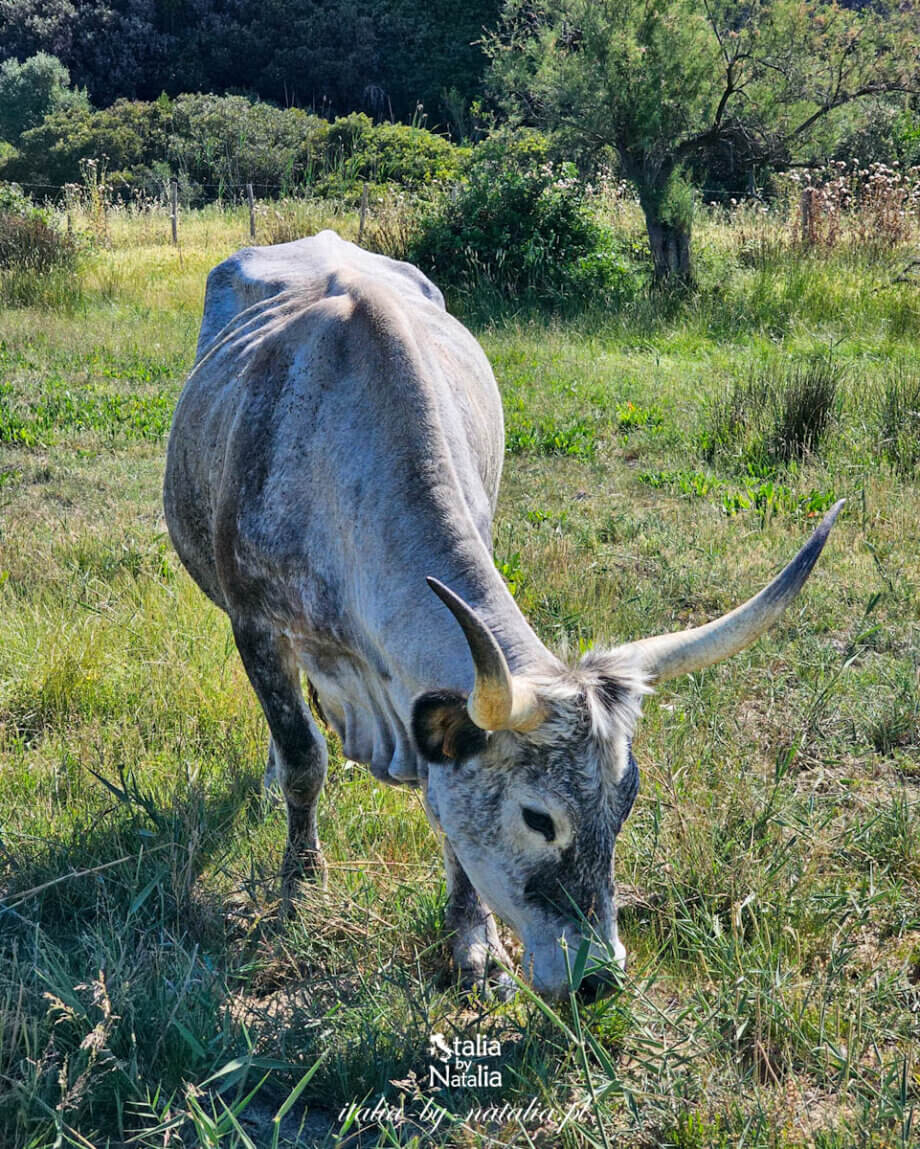
A wonderful place for nature lovers. The Maremma Nature Reserve in a nutshell — this is how one could briefly describe the stunning, wild beach with light-coloured sand and the road leading to it. This several-kilometre-long avenue runs for a considerable distance through a green tunnel formed by the crowns of magnificent old pine trees. On both sides, there are forests and pastures where you can spot, among others, Maremma cattle.
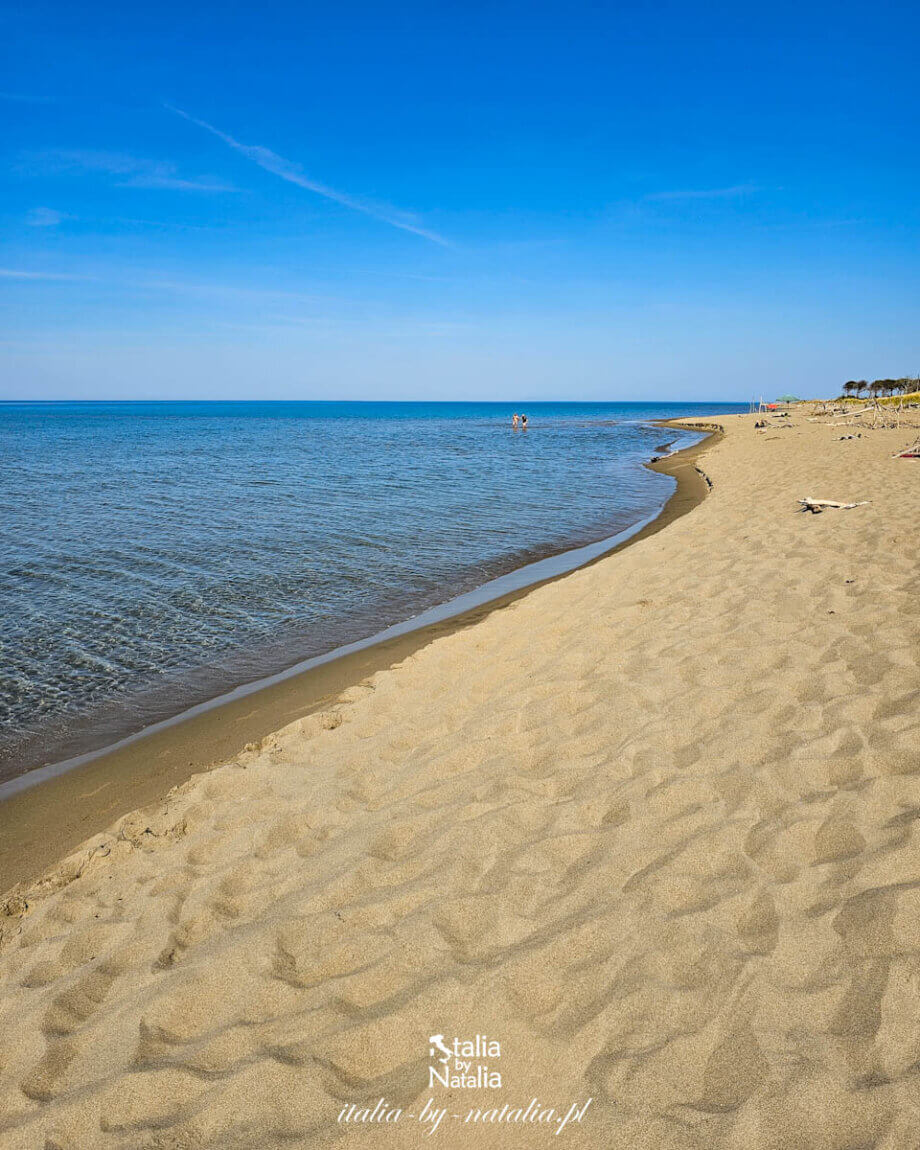
Access to the road leading to the beach is controlled by a barrier gate, and during the high season a parking fee also applies. In 2026, the rates for passenger cars are as follows:
- €2 per hour for visitors from outside the protected area;
- discounts are available, among others, for local residents and guests of selected agriturismo farms cooperating with the park.
It is worth coming here early in the morning, also during the low season on weekends and public holidays when beautiful weather encourages walking and spending time on the beach. We arrived at the entrance gate at around 9:30 a.m., but deliberately chose a weekday. The sign still showed 170 available parking spaces. During the last week of May, parking fees were not being charged.
Definitely one of the best beach choices in the province of Grosseto.
The beach is completely natural, and by simply walking a little further away from the main access point, you can find quiet stretches of sand even in the peak season, away from the crowds.
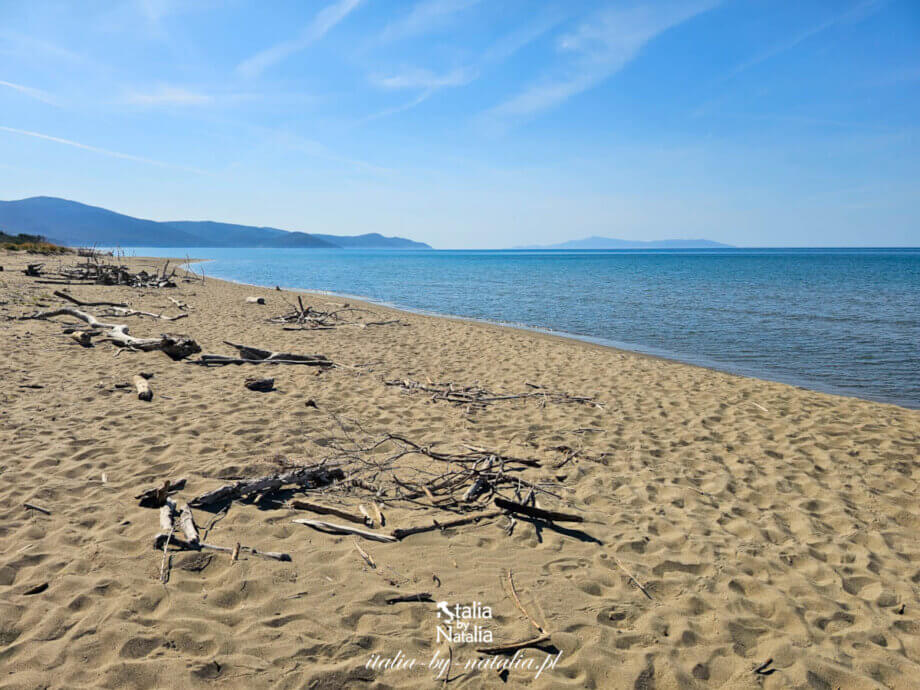
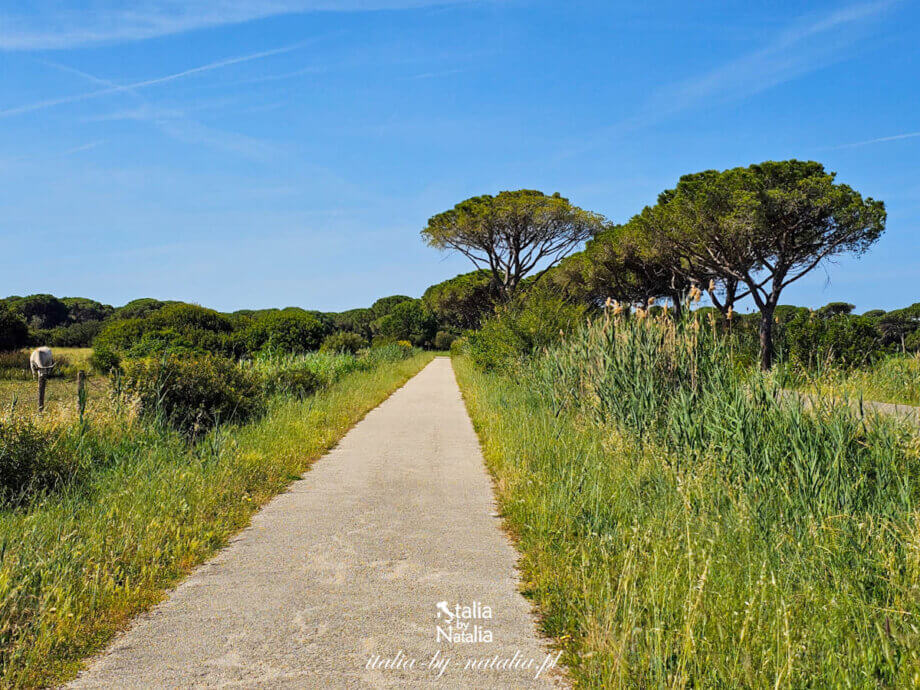
Attention, dog owners! In Marina di Alberese, there is a strict ban on bringing any animals onto the beach, even if they are kept on a leash and do not enter the water.
Spiaggia dell’Osa in Talamone
Spiaggia dell’Osa stretches south of Talamone, at the foot of the hill crowned by the distinctive silhouette of the medieval town. It is a wide, sandy beach with a gently sloping seabed, partly surrounded by dunes and Mediterranean vegetation. Here you will find both organised beach clubs and completely free public beach sections.


Thanks to its location on the open Talamone Bay, this area often benefits from steady winds, which is why it has been popular among windsurfing and kitesurfing enthusiasts for years. At the same time, the wide stretch of beach means that even in the high season it is easy to find a quieter spot to relax.
Giannella Beach
Giannella Beach stretches along the sandy tombolo connecting the former island, today the mountainous Monte Argentario peninsula, with the mainland. On one side, the tombolo is bordered by the calm waters of the Orbetello Lagoon, while on the other it faces the Tyrrhenian Sea, allowing you to admire two completely different landscapes during a single walk. Along the road running parallel to the beach, you will find parking areas with paths leading through a narrow strip of forest directly to the shore.


The several-kilometre-long Giannella Beach, facing north-west, offers fine sand and a gently sloping seabed. Thanks to its sheltered location, the water here is often calmer than along more exposed sections of the coastline. Along the beach, you will find both organised beach clubs and extensive stretches of free public beach.
Cala Galera in Porto Ercole
Cala Galera is one of the few easily accessible beaches near Porto Ercole and on the Monte Argentario peninsula as a whole. This sandy, well-sheltered bay with a gently sloping seabed is a great choice both for families with children and for those planning a short stop while exploring the peninsula. There is an organised beach club here, as well as undeveloped sections of the beach.

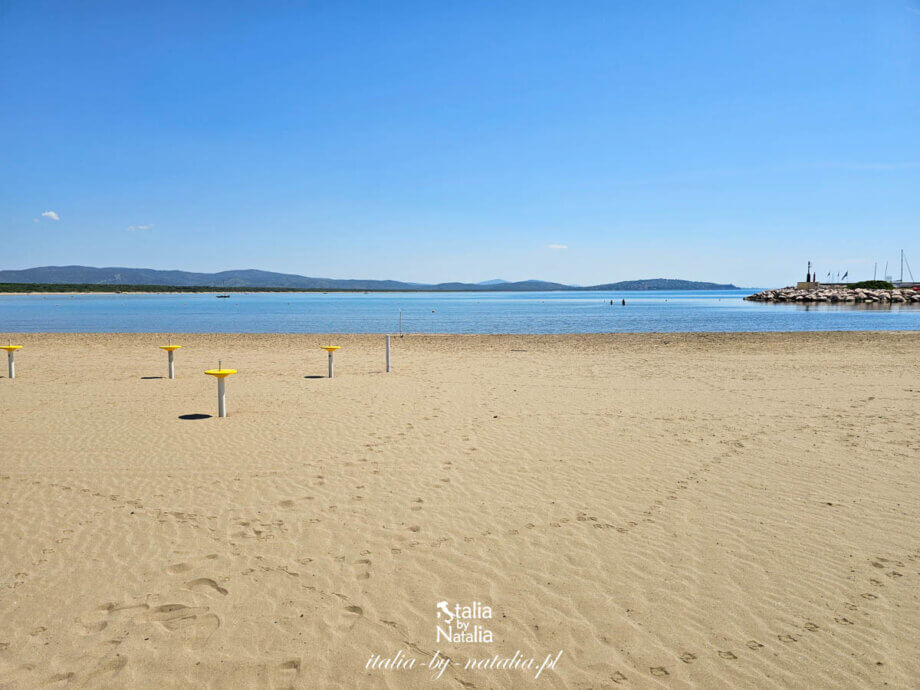
The beach can be reached from the nearby car park via a walk of approximately 500 metres. Right next to it lies the modern Cala Galera marina, from where yachts and sightseeing boats set sail every day.
Beaches in the Duna Feniglia Nature Reserve
The beaches of the Duna Feniglia Nature Reserve are among the most distinctive along the entire Tuscan coastline. They stretch along a six-kilometre tombolo connecting the area of Porto Ercole with Ansedonia, while also separating the Tyrrhenian Sea from the Orbetello Lagoon. Parking areas are available at both ends of the tombolo; beyond that, access is only on foot or by bicycle.
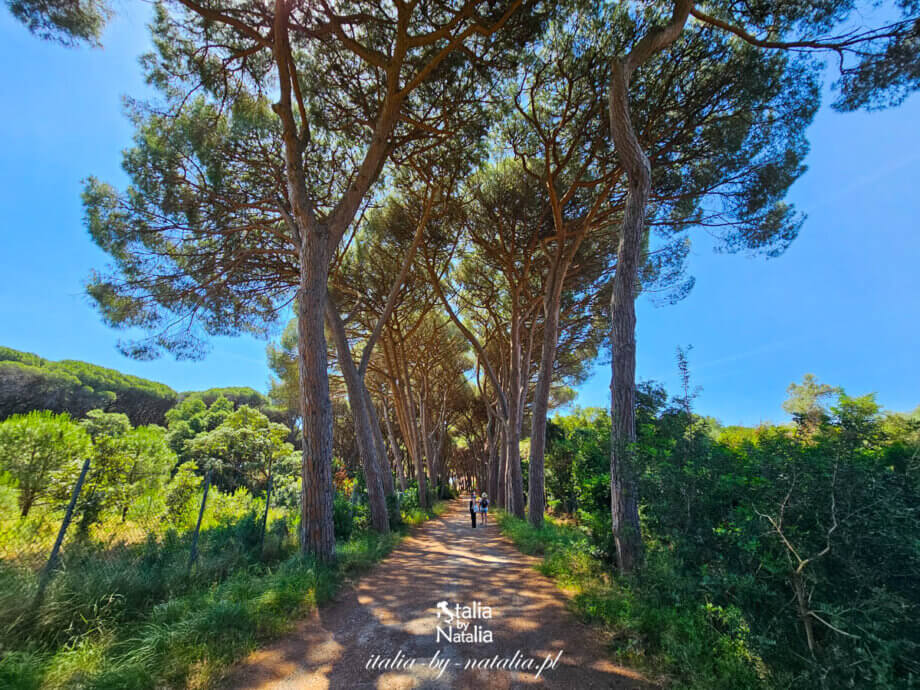

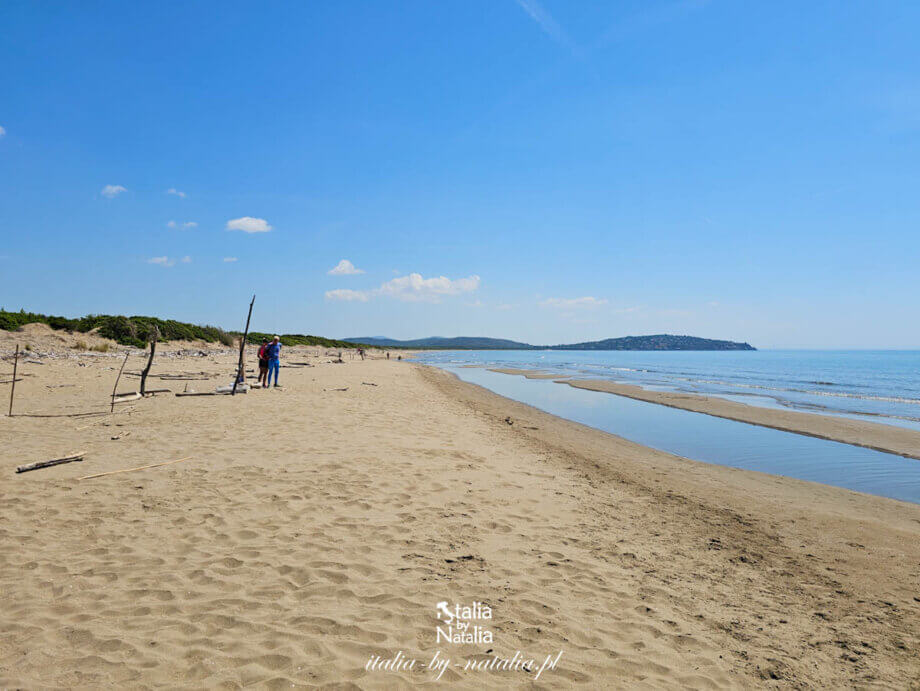

The beach can be reached via paths branching off from the beautiful unpaved walking and cycling trail that runs through the centre of the reserve. Along the route, you will find educational information boards and stone markers indicating the kilometres and entrances. The dunes, vast pine forest, and freely roaming fallow deer make a walk through the reserve just as much of an attraction as relaxing by the sea itself. Most visitors gather near the parking areas, while in the middle section of the reserve there is hardly anyone around.
Definitely one of the best beach choices in the province of Grosseto.
Ansedonia Beach
Ansedonia Beach stretches along the southern side of the headland and extends for several kilometres towards the Capalbio coastline, Lago di Burano, and the border with the Lazio region. This stretch of coast is less developed, allowing it to preserve its natural character with dunes and Mediterranean vegetation.

The most distinctive landmark near the beach is the rock-cut Tagliata Etrusca canal which, despite its name, is not an Etruscan creation but a work of Roman hydraulic engineering. Next to it stands the Torre della Tagliata tower.
Is it worth going to the seaside in Tuscany?
It is definitely worth it, but only if you carefully consider all the aspects that I have discussed in detail in this guide. The Tuscan coastline is diverse and offers many different attractions, but you will not find all of them in every location. First, you need to ask yourself what matters most to you and what you expect from a holiday on the local beaches.
Tuscany does not offer intensely turquoise waters everywhere. Not every famous seaside town has a beautiful beach — in fact, I would even say that most resort beaches do not appeal to me at all. I prefer the wild ones, with dunes and pine forests, but the vast majority of them require your own means of transport. On the other hand, the well-developed infrastructure along the Tuscan coast makes it possible to reach many places without a car.
When you add the wonderful Tuscan cuisine and the many opportunities for trips to fascinating places (including by train), the answer seems obvious.
Where is the most beautiful seaside area in Tuscany?
I am not a fan of the northern part of the Tuscan coastline, but if I had to choose the most beautiful beach — in my opinion — among the provinces of Lucca, Pisa, and Massa-Carrara, I would pick Spiaggia della Lecciona in Marina di Torre del Lago Puccini without hesitation. In the central part of the Tuscan coast, my choices would be the beaches in the Tomboli di Cecina Nature Reserve and the beaches in the Sterpaia Nature Reserve. In Maremma, I would choose Cala Civette and Cala Violina in the Bandite di Scarlino Nature Reserve, Marina di Alberese, and Duna Feniglia.
Tuscan Beaches – Answers to the Most Frequently Asked Questions
-
Where are the most beautiful beaches in Tuscany?
In my opinion, the most beautiful beaches are found along the southern part of the Tuscan coast. Cala Violina and Cala Civette, Le Rocchette, Marina di Alberese and Feniglia are all located in the Maremma.
-
Are there sandy beaches in Tuscany?
Yes, the vast majority of beaches in Tuscany are sandy, sometimes with a mix of gravel, particularly in the strip closest to the water.
-
Where can you find turquoise water in Tuscany?
Tuscany doesn’t have the intensely turquoise water you’ll find on Calabria’s Coast of the Gods or in Sardinia. That said, there are places where the sea is noticeably bluer than at most beaches. The most beautiful colours are found on the islands of the Tuscan Archipelago, while on the mainland, the beaches within the Bandite di Scarlino Nature Reserve offer the loveliest shades of blue.
-
Where should you go with children on the Tuscan coast?
Every stretch of the Tuscan coast offers good conditions for families with children, but a few beaches stand out for their gently sloping seabeds and calm, shallow water. Near Pisa, Bagno Tritone’s crescent-shaped breakwaters create sheltered, protected pools that are ideal for little ones. In Maremma, Le Rocchette and Marina di Grosseto both have gently sloping shorelines and shallow water close to shore, while Marina di Vada is another good pick thanks to its gradual seabed and well-developed tourist infrastructure.
-
Are the beaches in Tuscany free to enter?
No fee is required to access the beaches in Tuscany — they’re free to enter. Only designated beach clubs offering extra facilities charge for their services.
-
Where should you go on the Tuscan coast without a car?
The best option is to choose a town with a railway station right in the centre or within easy walking distance of the beach. Some of the best bases are Viareggio, Castiglioncello, San Vincenzo and Follonica. All have convenient train connections to other Tuscan cities and to Rome, and you can walk from the station to the beach in a few minutes or so.
-
Can you bring a dog to the beaches in Tuscany?
Yes, dogs are allowed in many places, but not every beach lets dogs into the water. The safest choice is a beach specifically dedicated to dogs, where they can roam freely and swim in the sea. You’ll find dog-friendly beaches along almost every stretch of the Tuscan coast.
-
When is the best time to go to the seaside in Tuscany?
The beach season in Tuscany runs from early June to the end of September, but it’s best to avoid the peak season in August.